Friday | 17th July 2026
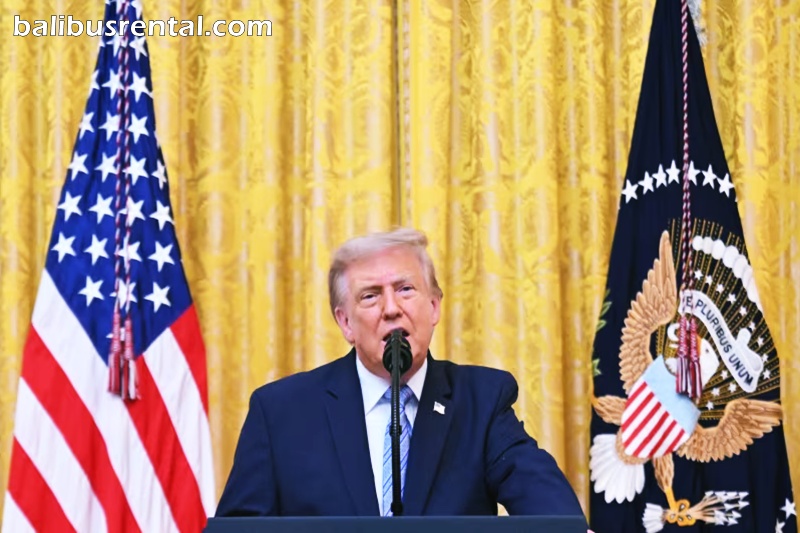
President Donald Trump used a rare primetime address from the White House on Thursday evening to warn that the United States faces what he described as a deeply vulnerable election system. Although the speech produced few genuinely new revelations, it immediately reignited debate over election integrity, the role of intelligence agencies, and Trump’s continued efforts to reshape public perceptions ahead of the 2026 midterm elections.
While the president framed the address as a major disclosure of previously classified intelligence, analysts reviewing the released documents found little evidence to support Trump’s sweeping claims that America’s elections are fundamentally compromised. Instead, many experts viewed the speech less as a presentation of new facts and more as a political message that could foreshadow Trump’s strategy if Republicans perform poorly in November 2026.
Few New Revelations Despite Dramatic Presentation
Trump portrayed the televised address as an extraordinary moment, claiming that newly declassified intelligence documents had been hidden from both himself and the American public. According to the president, these files demonstrate that the country’s election infrastructure falls far short of acceptable security standards.
However, an initial examination of the documents suggests that much of the information has been publicly known for years. Several reports discuss cyber vulnerabilities, foreign intelligence collection, and election security concerns that had already appeared in a 2021 assessment produced by the U.S. intelligence community.
Rather than exposing previously unknown interference, many of the documents revisit longstanding concerns about foreign governments attempting to gather information on American politics and public opinion.
Even Trump acknowledged during his remarks that some of the material consisted of what he called “raw intelligence,” suggesting that portions of the information had not yet undergone full intelligence analysis or verification.
China Again Becomes the Centerpiece
One of Trump’s principal arguments centered on China, which he claimed had gained access to hundreds of millions of American voter records.
While the allegation sounded dramatic, similar findings have previously appeared in intelligence assessments. U.S. intelligence agencies have long concluded that China has collected information about American voters, political parties, candidates, campaign staff, and government officials as part of broader efforts to understand and potentially influence U.S. policymaking.
Those same intelligence reports, however, also concluded that although Beijing sought to gather political intelligence, it did not interfere in the outcome of the 2020 presidential election.
Trump also referenced intelligence indicating that China sought to undermine domestic confidence in his presidency before the 2020 election. Critics note that foreign influence campaigns designed to shape public opinion differ significantly from direct election interference or vote manipulation.
Throughout the speech, Trump stopped short of presenting evidence that any foreign power actually altered vote totals or changed election outcomes.
Even Conservative Allies Acknowledge No Evidence of Changed Votes
Perhaps one of the most notable developments came after the address rather than during it.
Conservative journalist John Solomon, who worked alongside the White House during the declassification process, acknowledged that the intelligence community had found no evidence that any foreign government successfully changed votes in the 2020, 2022, or 2024 elections.
That admission stands in stark contrast to Trump’s repeated claims over several years that American elections have been systematically stolen through fraud or foreign interference.
While Solomon maintained that foreign governments attempted to collect information and influence public opinion, he conceded that intelligence agencies uncovered no proof that vote counts themselves had been altered.
A Potential Preview of Trump’s 2026 Election Strategy
Although the speech contained relatively little new evidence, many political observers believe its significance lies elsewhere.
With the 2026 midterm elections approaching and Republicans facing potentially difficult contests in several battleground states, Trump’s remarks appeared to lay the groundwork for challenging future election results if the GOP underperforms.
Rather than announcing dramatic new federal oversight measures—such as deploying federal personnel to polling locations or directly intervening in state election administration—Trump focused on portraying the electoral system itself as fundamentally broken.
According to the president, the newly released documents reveal an election process so vulnerable that it cannot reasonably be defended.
He went even further by arguing that American elections are less secure than those conducted in many developing countries, describing the current system as unacceptable.
While such rhetoric has become familiar during Trump’s political career, delivering it from the White House in a nationally televised address elevated its political significance.
Federal Cooperation and Election Security Measures
Trump stated that his administration would work closely with state governments to strengthen election security and improve protection of sensitive voter information.
He suggested that federal agencies would coordinate with states to mitigate cybersecurity threats and address vulnerabilities identified in the intelligence reports.
However, the president provided relatively few specific policy proposals beyond urging Congress to pass his preferred election legislation.
Instead, much of the speech emphasized the need for broader structural reforms while warning that current protections remain inadequate.
Pressure Builds Around the SAVE America Act
A major focus of Trump’s address was his renewed call for Congress to approve the “SAVE America Act,” legislation that he argues would significantly strengthen election security.
Trump framed passage of the bill as essential to restoring confidence in future elections.
Speaking directly to lawmakers, he suggested that anyone opposing the legislation must have ulterior motives.
According to Trump, the only reason legislators would reject the proposal is because they want opportunities to cheat during elections or believe their political candidates cannot win fairly.
The president delivered those remarks with visible frustration, pausing for emphasis before accusing opponents of seeking electoral advantages rather than legitimate democratic competition.
Despite Trump’s repeated advocacy, political analysts widely believe the legislation faces little chance of becoming law given congressional divisions and insufficient bipartisan support.
Several Republicans have also reportedly advised the president that the bill is unlikely to pass.
Democrats Warn of Efforts to Undermine Confidence
Democratic leaders responded quickly following the White House address.
The nation’s 24 Democratic governors jointly released a statement accusing Trump of attempting to intimidate voters and weaken public confidence in free and fair elections.
The governors argued that repeated allegations of widespread fraud, unsupported by evidence, risk eroding trust in democratic institutions.
They emphasized that numerous reviews, audits, recounts, and court decisions have consistently concluded that recent American elections were conducted securely and accurately.
According to the governors, conspiracy theories cannot overturn years of election administration, judicial review, and bipartisan certification processes.
Limited Focus on Revisiting the 2020 Election
Many observers expected Trump to devote much of the speech to rearguing his loss in the 2020 presidential election.
Instead, the president spent comparatively little time discussing specific events from that contest.
He briefly referenced allegations involving voter registration fraud in Michigan and claimed that certain FBI documents had been concealed from public view.
Trump said he intended to have FBI Director Kash Patel further investigate those issues.
However, the allegations themselves have circulated publicly for several years and have already received significant scrutiny.
The president avoided directly repeating one of his most frequent claims—that he actually won the 2020 election despite official certification showing Joe Biden’s victory.
Nevertheless, by portraying the election system as fundamentally flawed, Trump indirectly reinforced his longstanding narrative that previous elections cannot be fully trusted.
Previous Investigations Found No Widespread Fraud
Trump’s renewed claims continue to conflict with findings from multiple investigations conducted after the 2020 election.
Numerous federal and state officials, including members of Trump’s own administration, concluded that there was no evidence of widespread fraud capable of changing the election outcome.
Former Attorney General William Barr, appointed by Trump himself, publicly rejected allegations that the election had been stolen.
Likewise, dozens of court cases filed by Trump allies challenging election results were dismissed after judges found insufficient evidence to support the claims.
Despite those findings, Trump criticized officials who previously described the 2020 election as one of the most secure in American history.
He accused elements of what he called the “deep state” of concealing evidence from the public.
Familiar False Claims Extend Beyond Election Issues
Trump’s remarks were not limited to election security.
Within the opening minutes of the speech, the president repeated several inaccurate statements unrelated to voting, including claims about inheriting the highest inflation in nearly five decades and assertions regarding the number of convicted murderers who entered the country during the Biden administration.
Fact-checkers have repeatedly disputed both claims.
The speech also adopted an overtly political tone, with Trump repeatedly accusing Democrats of supporting election fraud while presenting his proposed legislation as the only acceptable solution.
Such rhetoric raised questions about whether the address served more as a campaign-style political speech than a traditional presidential policy announcement.
Television Networks Faced a Difficult Decision
Trump’s address also highlighted an ongoing challenge for television broadcasters.
Networks had to decide whether to air a presidential speech live despite uncertainty over its factual accuracy and Trump’s well-documented history of making false or misleading claims about elections.
Several broadcasters, including CNN, chose not to carry the address live on television.
White House Communications Director Steven Cheung sharply criticized those decisions, accusing news organizations of refusing to let Americans hear what he described as the truth.
The debate reflects broader tensions between journalistic responsibility, presidential access, and concerns about amplifying potentially misleading information.
Public Opinion Remains Deeply Divided
Whether Trump’s speech ultimately changes public opinion remains uncertain.
Polling suggests that claims of widespread election fraud continue to resonate primarily with Trump’s core supporters rather than the broader electorate.
A Reuters-Ipsos survey conducted earlier this year found that roughly one-third of Americans believe the 2020 election was stolen from Trump, while nearly two-thirds reject that conclusion.
On the broader issue of election security, however, Americans remain more divided.
Nearly half of respondents agreed that large numbers of fraudulent ballots may have been cast by non-citizens, despite repeated studies finding extremely few verified cases of non-citizen voting.
Republicans have increasingly centered that issue in their campaign for the SAVE America Act, arguing that stricter voting requirements are necessary to prevent future abuses.
Election experts, however, continue to maintain that documented instances of non-citizen voting remain exceedingly rare and have not affected national election outcomes.
Looking Ahead to 2026
While Thursday night’s address produced few new factual revelations, its broader political implications may prove more significant than the documents themselves.
Trump once again cast doubt on the integrity of American elections while tying future confidence in the electoral system to congressional approval of his preferred legislation.
With the 2026 midterm elections drawing closer, critics fear that the speech may represent an early effort to shape public expectations before votes are cast.
Supporters, meanwhile, argue that raising concerns about election security is necessary to strengthen public confidence.
Whether Trump’s warnings influence voters—or simply reinforce existing partisan divisions—will likely become clearer as the campaign season intensifies in the months ahead.