Wednesday |6th May 2026
Michigan Democrats notched a closely watched victory Tuesday in a special election for a pivotal state Senate seat, delivering another instance of the party outperforming expectations in competitive territory and reinforcing its momentum ahead of the midterm cycle.
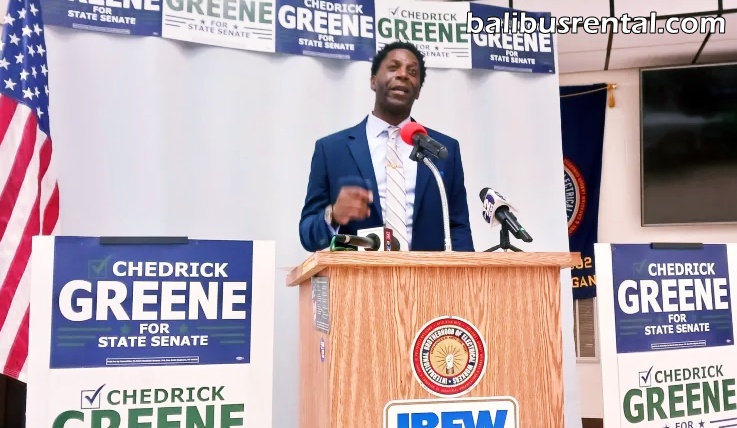
Democratic candidate Chedrick Greene, a Marine veteran and fire captain, defeated Republican attorney Jason Tunney in a race that ultimately determined whether Democrats would maintain their narrow hold on the state Senate. With roughly 93% of ballots counted, Greene held a commanding lead of about 19 percentage points — a margin that surprised many observers given the district’s recent voting history.
The result is especially notable because the district had been nearly evenly split in the 2024 presidential election. Kamala Harris carried the same area by less than a single percentage point, underscoring how competitive the electorate remains. That razor-thin margin had made the special election a key test of voter sentiment in a state widely regarded as one of the nation’s premier political battlegrounds.
Michigan has consistently played an outsized role in national politics, with fiercely contested races at both the state and federal levels. It is expected to remain central in the upcoming midterm elections, with high-stakes contests for governor and the U.S. Senate likely to draw significant national attention and resources from both parties.
Greene’s victory adds to a growing pattern of Democratic candidates outperforming their 2024 benchmarks in special elections across the country. Party strategists see these results as an encouraging signal that their messaging on economic concerns and personal freedoms is resonating with voters, even in politically divided areas.
In his victory speech, Greene emphasized a campaign strategy rooted in addressing everyday concerns. He said the win was driven by focusing on issues that directly affect working families, including rising living costs, public safety, and individual rights. His campaign frequently highlighted his frontline experience as a firefighter and veteran, framing him as a candidate who understands crisis management and community needs.
Tunney, meanwhile, conceded the race but struck a forward-looking tone, noting that the contest may not be the final chapter between the two candidates. In his statement, he described the special election as “only the halfway point,” suggesting a potential rematch in the regularly scheduled November election, when the seat will again be on the ballot.
The vacancy arose after Kristen McDonald Rivet resigned the seat to join Congress in January 2025. Her departure created an opening that quickly became a focal point for both parties. Rivet actively supported Greene during the campaign, joining forces with prominent Democrats including Governor Gretchen Whitmer, who also campaigned on his behalf.
Greene’s campaign messaging leaned heavily on economic themes. One widely circulated advertisement featured him extinguishing a dumpster fire labeled with issues such as “higher rents,” “job loss,” and “price gouging,” symbolizing his pledge to tackle the financial pressures facing many households.
Beyond the immediate outcome, the race may offer broader insights into voter behavior heading into the midterms. Democrats are likely to point to Greene’s decisive margin as evidence that their coalition remains competitive — and potentially expanding — in swing regions. Republicans, meanwhile, may view the result as a reminder of the importance of turnout and candidate positioning in districts where even small shifts in voter sentiment can have outsized consequences.
As both parties prepare for November, the Michigan special election stands as an early indicator of the political currents shaping the next phase of the national electoral landscape.