Thursday | April 23, 2026
“Seriously fractured” was the phrase used by Donald Trump to characterize Iran’s leadership as he announced a ceasefire window, urging Tehran to use the pause to formulate a “unified” negotiating position. The White House pointed to Iran’s absence from a planned second round of talks in Pakistan with Vice President JD Vance as evidence of internal disarray, suggesting that competing factions within the Islamic Republic were unable to agree on a coherent diplomatic path.
But analysts and regional observers have pushed back on that narrative, arguing that Washington may be misreading both Iran’s internal dynamics and its negotiating posture. Tehran has maintained a consistent condition for returning to talks: the lifting of what it calls a US “blockade” on its ports. Far from signaling fragmentation, some experts interpret this as a calculated and unified stance. Mehrat Kamrava, speaking to CNN, dismissed the notion of a fractured leadership, arguing instead that Iran’s political elite has demonstrated notable cohesion both on the battlefield and at the negotiating table.
That cohesion, however, exists within a dramatically altered power structure. The targeted killings by the United States and Israel of key Iranian military and political figures—including long-time supreme leader Ali Khamenei—have forced a rapid reconfiguration of authority. In the absence of the elder Khamenei, a smaller circle of senior officials drawn from across the political spectrum has taken on the responsibility of steering the country through what many describe as an existential conflict. At the center of this transition is Mojtaba Khamenei, who succeeded his father but remains largely out of public view, adding a layer of opacity to decision-making at the highest level.
This evolving leadership faces pressure from multiple directions. Domestically, hard-line factions demand resistance and reject any outcome that could be framed as capitulation. Internationally, Trump’s push to declare victory—and his often public commentary on sensitive negotiations—has complicated diplomatic efforts. Despite these pressures, experts suggest that Iran’s leadership is more aligned now than before the war began. Trita Parsi notes that the consolidation of power into a tighter circle has reduced internal competition and fostered greater agreement on overarching strategy, even if tactical disagreements persist.
Public messaging from Tehran has reinforced this image of unity. Officials have consistently denied reports of infighting, framing such claims as psychological warfare by adversaries. Mehdi Tabatabai publicly rejected the narrative of division, emphasizing what he described as “exceptional” alignment between military operations, public sentiment, and diplomatic efforts.
One figure who has come to symbolize this unified front is Mohammad Bagher Ghalibaf. A veteran of the Islamic Revolutionary Guard Corps and current speaker of parliament, Ghalibaf led Iran’s delegation in the first round of talks in Islamabad. His appearance alongside a diverse group of officials from across Iran’s سیاسی spectrum appeared to be a deliberate signal: that despite internal differences, the state is presenting a coordinated face to the outside world.
Still, unity does not mean uniformity. Differences over how to prosecute the war and engage diplomatically with Washington remain. Yet analysts caution against overstating these divisions. According to Parsi, attributing the lack of a breakthrough solely to Iranian disunity ignores other critical factors—particularly inconsistencies in US messaging that may have undermined trust at key moments in the مذاکرات.
Behind the scenes, Iran’s governance has also undergone a structural transformation. The traditional system—marked by competing power centers that operated under the ultimate authority of the supreme leader—has been replaced, at least temporarily, by a wartime model. This model centralizes decision-making within a military-political framework designed to navigate the crisis without conceding defeat.
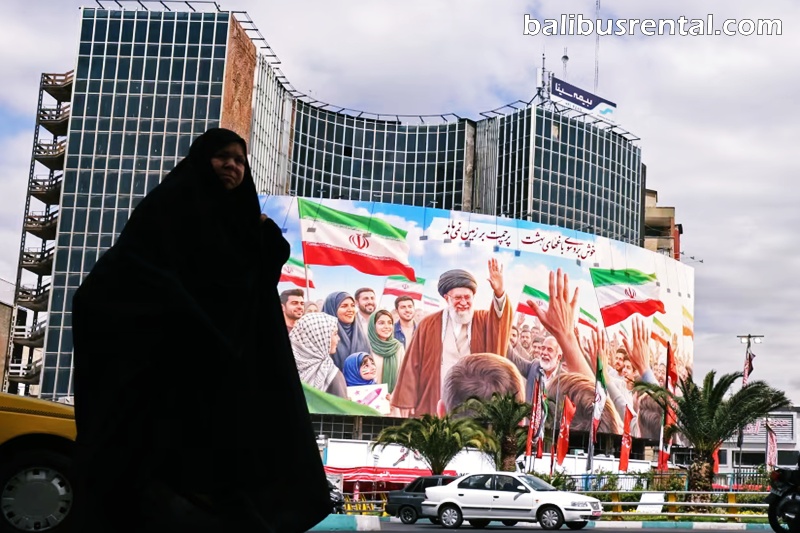
On the streets, this shift is mirrored by visible mobilization. Hard-line supporters have staged frequent demonstrations backing the regime and opposing any agreement perceived as weakening Iran’s position. These sentiments are echoed in parliament and state media, where even minor संकेत of compromise can trigger intense backlash. When Foreign Minister Abbas Araghchi recently suggested that the Strait of Hormuz remained open to commercial shipping, he faced swift criticism from hard-liners, prompting other officials to clarify Iran’s stance.
The uncertainty surrounding Mojtaba Khamenei’s condition further complicates the picture. Reports that he may be injured or incapacitated have raised questions about how decisions are being made at the highest level. According to Hamidreza Azizi, limited access to the supreme leader has effectively expanded the autonomy of other officials. Without regular direct guidance, they are increasingly responsible for interpreting strategic priorities and making critical decisions on war and diplomacy.
In this sense, Iran’s leadership today may be less hierarchical but not necessarily less cohesive. The absence of a single dominant figure has forced a collective approach—one shaped by necessity, constrained by external threats, and unified, at least outwardly, by the imperative of survival.