Thursday | 9th July 2026
The United States launched a second consecutive day of military strikes against Iran, dramatically escalating tensions in the Middle East just hours after President Donald Trump declared that the fragile interim agreement aimed at ending the conflict was effectively “over.” The renewed attacks marked another significant deterioration in relations between Washington and Tehran, raising fears that both countries are moving closer to a prolonged regional confrontation with potentially severe global consequences.
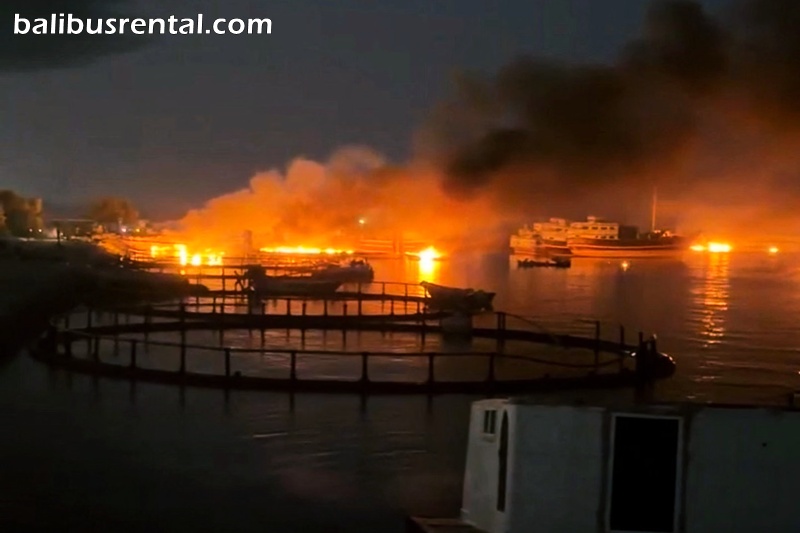
Late Wednesday night, Iranian state media reported a series of explosions across several strategically important locations in southern Iran. Blasts were heard in the major port city of Bandar Abbas, located on the Strait of Hormuz, one of the world’s busiest and most strategically vital maritime chokepoints. Additional explosions were reported in the nearby coastal city of Sirik as well as Bushehr province, home to Iran’s only operational nuclear power plant and numerous military installations.
The strikes came shortly after President Trump issued a strongly worded statement on his Truth Social platform, linking the military action directly to recent Iranian attacks on commercial shipping.
“This is in retribution for yesterday’s bombing of ships by Iran,” Trump wrote. “If it happens again, it will get much worse!”
His remarks signaled that the United States viewed the latest operation as both retaliation and a warning against any further disruption to international shipping lanes.
The US Central Command (CENTCOM) later confirmed the operation through an official statement posted on X, formerly Twitter.
“At the direction of the Commander in Chief, US Central Command forces have started conducting additional strikes against Iran to further degrade their ability to threaten freedom of navigation in the Strait of Hormuz,” the military command said.
The latest military campaign follows Tuesday’s attacks on three cargo vessels transiting the Strait of Hormuz, one of the world’s most important energy corridors. The incident sparked the largest exchange of fire between American and Iranian forces since the two countries reached an interim ceasefire agreement last month.
The escalation also prompted Washington to increase economic pressure on Tehran. The US Treasury Department revoked a temporary sanctions waiver that had allowed Iran to export limited quantities of oil under the interim agreement, further tightening restrictions on the country’s struggling economy.
The renewed fighting has significantly undermined hopes that the memorandum of understanding signed by the two sides on June 17 could eventually evolve into a comprehensive peace agreement capable of ending months of hostilities.
Military tensions continued to spread throughout the Gulf region.
After launching attacks against US military facilities in Bahrain and Kuwait on Wednesday, Iran reportedly targeted the same locations again on Thursday. Air raid sirens sounded at least twice in Bahrain, home to the headquarters of the US Navy’s Fifth Fleet, highlighting the growing vulnerability of American military assets in the region.
Kuwaiti authorities said their air defense systems were actively intercepting incoming drones and missiles aimed at military installations. Officials from both Bahrain and Kuwait did not immediately report any casualties or significant damage.
According to Reuters, citing an unnamed US official, the latest overnight strikes were expected to be substantially larger and more extensive than the first round of attacks carried out earlier in the week.
Iranian state television also reported fresh explosions on Abu Musa Island, one of three disputed islands claimed by both Iran and the United Arab Emirates. The islands occupy a highly strategic position overlooking the Strait of Hormuz and are central to Iran’s ability to monitor and potentially control maritime traffic through the narrow waterway.
Despite reports of explosions in Bushehr province, Iran’s Mehr News Agency stated that the country’s Bushehr nuclear power plant remained unharmed and had not suffered any operational damage.
The conflict has continued to send shockwaves through global financial markets.
US stock indexes declined sharply during Wednesday’s trading session as investors reacted to growing geopolitical uncertainty. Meanwhile, Brent crude oil, the international benchmark for oil prices, surged by more than five percent, climbing close to $80 per barrel amid fears that continued fighting could disrupt energy supplies moving through the Strait of Hormuz.
Roughly one-fifth of the world’s seaborne oil passes through the narrow waterway, making any threat to shipping there a major concern for global energy markets.
The renewed military campaign also sparked political criticism within the United States.
Independent Senator Bernie Sanders condemned Trump’s decision to resume military operations, arguing that another conflict with Iran would prove costly and ultimately ineffective.
“Restarting his reckless war with Iran won’t make America stronger,” Sanders wrote on X. “It will cost more lives and waste more taxpayer dollars.”
He also criticized the rapid collapse of the ceasefire, noting that Trump had declared the agreement finished less than a month after it was signed.
The current wave of strikes follows an earlier US military operation that targeted multiple Iranian military facilities and port infrastructure after Tehran allegedly attacked several merchant vessels operating near the coast of Oman.
Speaking earlier during the NATO summit in Ankara, President Trump had openly hinted that additional military action was imminent.
“We’ll probably hit them hard again tonight,” he told reporters before later suggesting that the United States had no intention of engaging in a prolonged military campaign.
“Anything that happens is going to happen very fast,” Trump said, while adding that American forces might also “just finish the job.”
The president defended the continued strikes as a direct response to what he described as Iran’s aggressive actions against international shipping.
“They are behaving very badly,” Trump said, accusing Tehran of launching drones and missiles at commercial vessels traveling through the Strait of Hormuz.
Iran, however, has argued that under the terms of the interim ceasefire agreement it retains the right to regulate maritime traffic through the strategic waterway, a claim rejected by Washington and many Western allies.
Iranian Parliament Speaker Mohammad Bagher Ghalibaf responded defiantly, insisting that Tehran would not yield to American pressure.
“The era of bullying and extortion is over,” Ghalibaf wrote on X. “It leads nowhere. We don’t fold.”
During his return journey from the NATO summit, Trump was also questioned about reports suggesting security threats from Iran had prompted him to switch aircraft and fly part of the trip aboard an older Air Force One instead of the newer Qatari-donated aircraft used for the outbound journey.
The president dismissed the speculation.
“I have a threat all the time,” Trump said. “I’m number one on their list.”
The renewed American offensive coincided with preparations inside Iran for the burial of Supreme Leader Ali Khamenei in his hometown of Mashhad. Khamenei was killed during the opening phase of the joint US-Israeli military campaign that ignited the current conflict.
His funeral has become one of the largest public mourning events in recent Iranian history, with millions of people participating in multi-day ceremonies across cities in both Iran and neighboring Iraq. The burial is expected to further strengthen nationalist sentiment inside Iran even as military tensions with the United States continue to intensify and diplomatic prospects appear increasingly uncertain.