Wednesday | August 12, 2026
The White House Correspondents’ Association (WHCA) has called on President Donald Trump’s administration to establish a formal protocol for dealing with extraordinary security situations after it was revealed that reporters traveling with the president were unknowingly placed aboard a decoy aircraft during a secret operation in July.
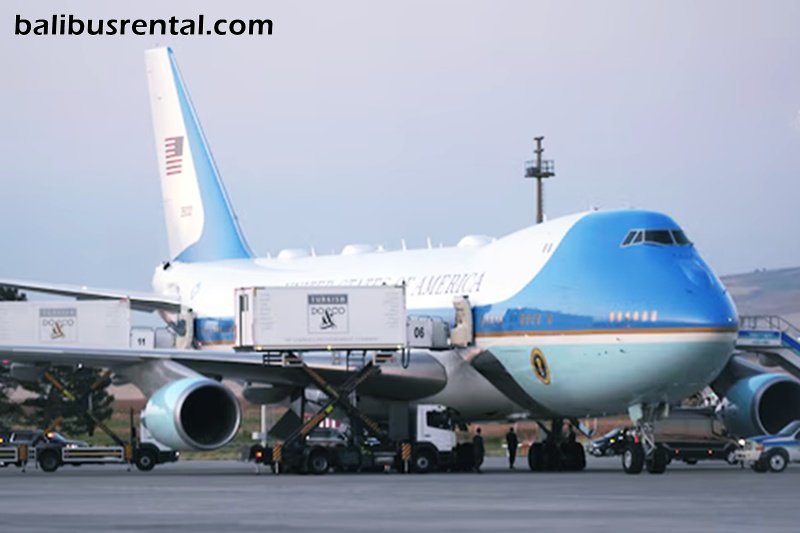
The request follows the disclosure of an elaborate security ruse in which Trump was secretly moved from Turkey on an alternate military aircraft while members of the presidential press pool and other administration officials remained aboard another plane, unaware that the president was no longer traveling with them.
Fox News anchor and senior White House correspondent Jacqui Heinrich, who is serving as president of the WHCA, met with Trump administration officials on Tuesday to discuss the incident and convey concerns raised by journalists who were part of the traveling press pool.
The Washington Post reported Monday night that the July 8 operation was prompted by an Iranian threat and involved the use of a decoy aircraft. The revelation came as a surprise to reporters who had been aboard the flight and believed they were traveling with the president.
The presidential press pool is traditionally expected to accompany the president during official travel and maintain an independent account of his movements. Its role is considered an important safeguard for transparency and accountability, particularly when the president is traveling internationally or during sensitive national security situations.
Following the publication of the report, the WHCA quickly began receiving concerns from members of the press corps. Heinrich said those concerns included press safety, the ability of journalists to maintain an independent record of the president’s movements, and the credibility of pooled reporting.
In a memo sent to members Tuesday evening, Heinrich described her meeting with White House officials as “candid and productive.” Although the discussion was conducted off the record, she made clear that the association believes the incident raises broader questions about the relationship between national security requirements and the press’s responsibility to independently document the president’s activities.
Heinrich acknowledged that protecting the president is the Secret Service’s highest priority and that legitimate security threats can sometimes require extraordinary measures. In such circumstances, operational security may prevent the administration from immediately sharing sensitive information with journalists.
At the same time, she argued that extraordinary security measures should not unnecessarily undermine the independence of the press or the historical record of the presidency.
The July 8 incident created a particularly unusual situation because the press pool’s account of the president’s movements was temporarily inaccurate. Reporters aboard the decoy aircraft believed Trump was traveling with them, while the president had already been moved to another aircraft. The discrepancy remained unknown to the journalists for approximately a month before anonymous sources disclosed the operation to The Washington Post.
For the WHCA, the issue extends beyond the details of a single security operation. Heinrich warned that public confidence in the accuracy of pool reports is essential because journalists traveling with the president serve as an independent source of information about his movements and activities.
She also cautioned that weakening confidence in the press pool could have consequences in an already highly polarized and conspiratorial information environment. If audiences begin questioning whether journalists can reliably report where and when the president travels, misinformation and confusion can become easier to spread.
The association therefore wants the administration to develop a clear protocol for future situations in which security concerns require the White House to restrict information from the traveling press corps.
Such a protocol, according to Heinrich, should balance several competing responsibilities. It should allow the Secret Service and other national security officials to respond quickly to genuine threats while also protecting journalists traveling with the president, preserving independent press coverage and establishing a process for correcting the public record when information must initially be withheld.
The goal is not necessarily to prevent the government from taking extraordinary security measures. Rather, the WHCA wants greater clarity about when such measures can be used, how they affect the press pool and how journalists can be informed or allowed to correct their reporting once the security threat has passed.
The incident also highlights the difficult balance between presidential security and transparency. The president of the United States is frequently a target of security threats, meaning that some information about his movements inevitably must remain secret. However, journalists accompanying the president have traditionally played a central role in creating an independent contemporaneous record of presidential travel.
The challenge for the White House will be finding a way to protect sensitive operations without damaging the credibility of that independent record.
Heinrich emphasized that maintaining trustworthy pool reporting is particularly important because inaccurate or incomplete information can be exploited by individuals seeking to spread false narratives about presidential activities.
The WHCA’s push for a formal agreement could therefore become a precedent for future administrations, establishing clearer expectations for how journalists are handled during emergencies, military threats or other extraordinary security situations.
White House communications director Steven Cheung did not immediately respond to a request for comment about Heinrich’s meeting with administration officials.
For now, questions remain about exactly how the July 8 operation was organized, who within the administration knew about the decoy flight and what safeguards will be put in place to ensure that similar incidents do not unnecessarily compromise the press pool’s ability to perform its role.
The controversy ultimately centers on a fundamental tension in presidential coverage: the government must be able to protect the president from genuine threats, but the public must also be able to trust that journalists assigned to document the president’s movements are receiving accurate information and can independently report what they observe.
The WHCA’s proposed protocol is an attempt to preserve both responsibilities when national security demands extraordinary measures.