
Uluwatu Temple Bali – Ancient Cliffside Sea Temple, History, Architecture and Spectacular Sunset Views
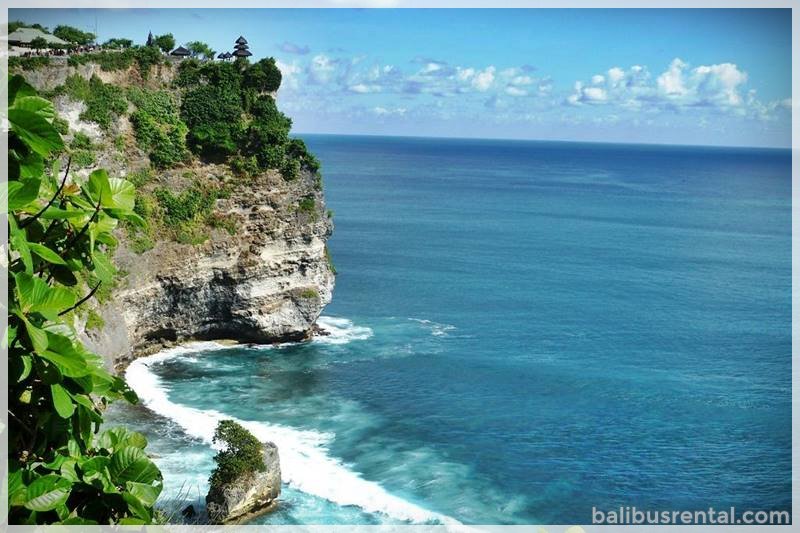
Uluwatu Temple, locally known as Pura Luhur Uluwatu, is one of Bali’s most famous Hindu sea temples and an important spiritual landmark on the southern coast of the island. Perched dramatically on a steep limestone cliff approximately 70–80 metres above the Indian Ocean, this ancient temple offers breathtaking ocean views, impressive traditional Balinese architecture and unforgettable sunset scenery.
Located in Pecatu Village, South Kuta, Badung Regency, Uluwatu Temple is approximately 30 kilometres from Denpasar and is one of the most popular cultural attractions in southern Bali. Its spectacular position on the edge of a rocky peninsula makes it particularly distinctive, as the temple appears to stand directly above the crashing waves of the Indian Ocean.
Uluwatu Temple is not only a beautiful tourist destination but also an important place of worship for Balinese Hindus. It belongs to the Sad Kahyangan Jagat, a group of six major sacred temples believed to protect the spiritual balance of Bali. The temple is associated with the worship of Dewa Rudra, a manifestation of the Hindu god Shiva.
Visitors come to Uluwatu to discover its fascinating religious history, admire its traditional stone architecture, walk along the dramatic coastal cliffs, observe the resident long-tailed macaques and experience the famous Kecak Fire Dance performed against the backdrop of the setting sun.
Location of Uluwatu Temple Bali
Uluwatu Temple is situated on the southwestern tip of the Bukit Peninsula in southern Bali. The temple occupies a spectacular limestone headland overlooking the Indian Ocean, with steep cliffs extending along both sides of the sacred complex.
Its official location is in Pecatu Village, South Kuta District, Badung Regency, Bali, Indonesia. The surrounding area is known for its beautiful beaches, dramatic coastal scenery, surfing destinations and luxury resorts.
Approximate driving distances to Uluwatu Temple include:
-
Denpasar: 30 km
-
Ngurah Rai International Airport: 22 km
-
Kuta: 20 km
-
Jimbaran: 12 km
-
Nusa Dua: 18 km
-
Seminyak: 25 km
-
Ubud: 55 km
Because of its elevated coastal position, Uluwatu Temple provides magnificent views of the open ocean, particularly during the late afternoon when the sun begins to descend towards the horizon.
Meaning and Origin of the Name Uluwatu
The name Uluwatu comes from two Balinese words: Ulu, meaning head, tip or end, and Watu, meaning stone or rock. Together, these words describe the temple’s remarkable location on the tip of a rocky limestone cliff.
The name Pura Luhur Uluwatu also carries spiritual significance. The word Luhur means something elevated, noble or sacred, reflecting the temple’s position high above the ocean as well as its importance in Balinese Hindu religious tradition.
Uluwatu Temple is regarded as a sacred spiritual centre where Balinese Hindus worship God in the manifestation of Dewa Rudra, who is associated with the forces of nature and the process of returning life to its original source.
History of Uluwatu Temple Bali
Uluwatu Temple has a long and fascinating history connected with the development of Hinduism and the growth of Balinese kingdoms. According to traditional Balinese manuscripts, including the Usana Bali and Dwijendra Tattwa texts, the temple is associated with the Hindu priest Mpu Kuturan and the religious figure Dang Hyang Nirartha.
Some traditional historical accounts associate the early development of Uluwatu Temple with Mpu Kuturan, a respected Hindu priest who played an important role in shaping Bali’s religious traditions and temple organisation.
Mpu Kuturan is traditionally believed to have visited the sacred site during his spiritual journey around Bali. Impressed by its peaceful atmosphere and extraordinary natural setting, he recognised the location as an appropriate place for religious worship.
According to local tradition, he contributed to the development and expansion of the temple complex, establishing it as an important spiritual destination.
Other historical traditions connect Uluwatu with Dang Hyang Nirartha, a highly respected Hindu priest who travelled throughout Bali during the 16th century. His spiritual journey is closely associated with several important temples on the island.
Balinese religious stories explain that Dang Hyang Nirartha reached Uluwatu during his final spiritual journey and eventually attained moksha, the liberation of the soul from the cycle of rebirth.
This event is considered an important part of the temple’s religious history, and Uluwatu remains closely associated with the spiritual teachings and legacy of this respected priest.
Uluwatu Temple During the Balinese Kingdom Period
During the development of Bali’s traditional kingdoms, temples played an important role in establishing religious identity and maintaining spiritual relationships between communities and their rulers.
Many Balinese kingdoms maintained important temples representing different geographical and spiritual directions, including sea temples, mountain temples and community temples.
Uluwatu became an important sea temple associated with the southern part of Bali. Its location overlooking the Indian Ocean made it a significant place for religious ceremonies and prayers connected with the protection and spiritual balance of the island.
Today, Uluwatu Temple continues to be regarded as one of Bali’s six principal Sad Kahyangan temples and attracts Hindu pilgrims from different parts of the island.
Religious Significance of Uluwatu Temple
Uluwatu Temple is one of the six Sad Kahyangan Jagat temples, which are considered among the most sacred Hindu temples in Bali. These six temples are believed to represent important spiritual directions and protect the island from negative influences.
According to Balinese Hindu tradition, Uluwatu Temple occupies the southwestern direction and is dedicated to Dewa Rudra, one of the manifestations of Ida Sang Hyang Widhi Wasa, the Supreme God.
Dewa Rudra is associated with the power of nature, transformation and purification. Worship at Uluwatu is therefore connected with maintaining harmony between human beings, nature and the spiritual world.
The temple is also an important destination for religious ceremonies, especially during major Balinese Hindu celebrations such as Piodalan, the temple anniversary ceremony.
During these occasions, Balinese Hindus visit the temple to pray, make offerings and participate in traditional religious activities.
Unique Architecture and Ancient Stone Structures
One of the most interesting features of Uluwatu Temple is its traditional Balinese architecture, which combines religious symbolism with the natural beauty of its limestone surroundings.
The temple complex contains several sacred shrines, traditional stone gateways and religious structures built according to Balinese Hindu architectural traditions.
Among its notable architectural features are the following:
1. Traditional Stone Gateways
The entrance areas feature traditional Balinese stone gateways, including split gates known as Candi Bentar. These structures are characteristic of Balinese temple architecture and create an impressive entrance to the sacred complex.
2. Ancient Winged Gate
One of the interesting historical features associated with Uluwatu Temple is its ancient winged entrance gate. This type of architectural structure is relatively uncommon and provides an important connection to the artistic traditions of earlier periods in Indonesian history.
Historical comparisons have been made between this gateway and similar architectural remains found in the Sendang Duwur mosque complex in Lamongan, East Java.
3. Sacred Shrines and Pelinggih
Inside the temple complex, visitors can observe traditional shrines known as Pelinggih. These sacred structures are used for Hindu worship and religious offerings.
4. Dalem Jurit Temple Complex
The Dalem Jurit area is another historically interesting section of Uluwatu Temple. Traditional accounts describe ancient stone objects in this area, including structures resembling boats or stone coffins associated with megalithic cultural traditions.
These historical features contribute to the archaeological and cultural importance of the temple.
Alas Kekeran – The Sacred Forest of Uluwatu Temple
Surrounding parts of Uluwatu Temple is a small protected forest locally known as Alas Kekeran, which means a restricted or protected forest.
This green area belongs to the temple environment and provides a natural habitat for numerous long-tailed macaques and other wildlife.
The monkeys are among the most noticeable features of the Uluwatu Temple experience. They can frequently be seen walking along the pathways, climbing trees and sitting on the stone walls overlooking the ocean.
Although the monkeys are an interesting attraction, visitors should take care of their personal belongings. They are known to grab sunglasses, hats, mobile phones, food and other loose objects.
For a more enjoyable visit, keep your belongings securely stored, avoid carrying food openly and never attempt to feed or touch the monkeys.
Spectacular Sunset Views at Uluwatu Temple
One of the main reasons travellers visit Uluwatu Temple is its spectacular sunset scenery.
The temple stands high above the Indian Ocean, providing an uninterrupted view of the western horizon. During the late afternoon, the changing colours of the sky create a beautiful backdrop for the ancient temple structures and dramatic limestone cliffs.
As the sun approaches the horizon, the ocean reflects shades of orange, red and gold, creating an unforgettable atmosphere.
The coastal walking paths around the temple are particularly popular for photography, allowing visitors to capture panoramic views of the cliffs, waves and surrounding coastline.
For the best sunset experience, visitors generally arrive in the late afternoon, allowing enough time to explore the temple grounds before watching the sunset.
Kecak and Fire Dance Performance at Uluwatu Temple
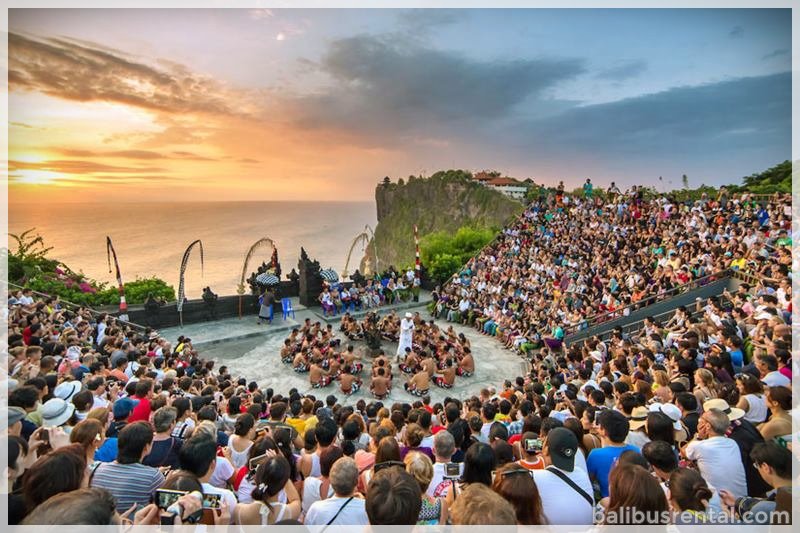
Another major attraction at Uluwatu Temple is the famous Kecak and Fire Dance, performed in an open-air amphitheatre overlooking the Indian Ocean.
The Kecak Dance is one of Bali’s most recognisable traditional performances. Unlike many other Balinese dances, it is accompanied primarily by the rhythmic chanting of a large group of male performers rather than a conventional gamelan orchestra.
The performers sit in a circular formation and repeatedly chant the distinctive sound of “cak, cak, cak”, creating an energetic musical atmosphere.
The performance tells episodes from the ancient Hindu epic Ramayana, particularly the story of Prince Rama, Princess Sita and Hanuman, the white monkey general.
The story follows the adventures of Rama as he attempts to rescue Sita from Ravana, the demon king of Lanka.
The performance usually features several important characters:
-
Rama: The prince and central hero of the Ramayana story.
-
Sita: Rama’s wife, who is kidnapped by Ravana.
-
Lakshmana: Rama’s younger brother and loyal companion.
-
Hanuman: The white monkey warrior who helps rescue Sita.
-
Ravana: The demon king responsible for kidnapping Sita.
The dramatic fire scene, traditional costumes and rhythmic chanting create a memorable cultural experience.
The Uluwatu Kecak Dance is especially popular because it is performed during sunset, with the Indian Ocean providing a spectacular natural backdrop.
Visitors are advised to arrive early, particularly during the high tourist season, as performances can become crowded.
Best Time to Visit Uluwatu Temple Bali
Uluwatu Temple can be visited throughout the year, but the most popular time is during the late afternoon.
The dry season, generally from April to October, is often preferred by visitors because it usually offers sunnier weather and better conditions for enjoying the coastal scenery.
However, the temple is also beautiful during the rainy season, particularly when the surrounding landscape becomes greener.
Recommended visiting times include:
-
Morning (9:00 AM–11:00 AM): Suitable for visitors who prefer a quieter atmosphere and cooler temperatures.
-
Afternoon (2:00 PM–4:00 PM): Ideal for exploring the temple grounds and walking along the cliff paths.
-
Late Afternoon (4:00 PM–6:30 PM): Popular for sunset photography and watching the Kecak Fire Dance.
Sunset times vary throughout the year, so it is advisable to check the local sunset schedule before planning your visit.

Places to Visit Near Uluwatu Temple
The southern Bukit Peninsula has several beautiful beaches, cultural attractions and coastal viewpoints that can easily be combined with a visit to Uluwatu Temple.
A beautiful white-sand beach surrounded by limestone cliffs, famous for surfing, swimming and its picturesque coastal setting.
2. Suluban Beach
Also known as Blue Point Beach, this destination is famous for its natural rock formations, narrow cave entrance and popular surfing spots.
3. Dreamland Beach
A scenic beach with white sand, blue water and impressive limestone cliffs, popular with surfers and beach lovers.
4. Garuda Wisnu Kencana Cultural Park
A major cultural attraction featuring the monumental statue of Lord Vishnu riding Garuda, along with traditional performances and cultural exhibitions.
Known for its dramatic limestone cliffs, winding coastal road, white sand and clear turquoise water.
A popular southern Bali beach surrounded by enormous limestone cliffs and featuring large statues of characters from the Mahabharata epic.
Why Uluwatu Temple Is a Must-Visit Attraction in Bali
Uluwatu Temple is much more than a beautiful tourist attraction. It represents the spiritual traditions, history, architecture and cultural identity of Bali.
Its dramatic position on a limestone cliff above the Indian Ocean makes it one of the island’s most recognisable landmarks. The combination of ancient temple structures, sacred forests, traditional religious ceremonies and spectacular sunset scenery creates an experience that is difficult to find elsewhere.
Whether you are interested in Balinese Hindu culture, ancient architecture, photography, traditional dance performances or simply enjoying breathtaking coastal views, Uluwatu Temple offers something memorable for every traveller.
For anyone planning a holiday in Bali, visiting Pura Luhur Uluwatu should be included in a southern Bali sightseeing itinerary.
Uluwatu Temple Bali Entrance Fee and Ticket Prices
The entrance fee for Uluwatu Temple (Pura Luhur Uluwatu) in Bali varies depending on whether visitors are international or domestic tourists. Based on the provided ticket prices
| Visitor Category | Ticket Price |
|---|---|
| Foreign Adult | IDR 60,000 |
| Foreign Child (4–12 years) | IDR 40,000 |
| Domestic Adult | IDR 40,000 |
| Domestic Child (4–12 years) | IDR 30,000 |
Additional Fees and Optional Activities
Kecak and Fire Dance Performance
Visitors who wish to enjoy the famous Kecak and Fire Dance at Uluwatu Temple must purchase a separate performance ticket. This traditional Balinese cultural show takes place in an open-air amphitheatre overlooking the Indian Ocean, making it particularly popular during sunset.
-
Adult Ticket: IDR 150,000
-
Child Ticket (4–9 years): IDR 75,000
Please note that the Kecak Dance ticket does not include the general Uluwatu Temple entrance fee. Both tickets must be purchased separately.
Parking Fees
-
Motorcycle / Scooter: IDR 2,000
-
Car: IDR 4,000
Important Visitor Information
-
Sarong and Sash: Sarongs and sashes are provided free of charge at the entrance if needed. These traditional garments must be worn when entering designated sacred temple areas to ensure visitors dress respectfully.
-
Payment Method: Bringing sufficient Indonesian Rupiah (IDR) in cash is recommended, as card payment and digital payment facilities at the entrance may not always be reliable.
-
Beware of Monkeys: Uluwatu Temple is home to many long-tailed macaques. Keep sunglasses, hats, mobile phones, cameras and other personal belongings securely stored, as the monkeys are known to grab loose items.
-
Kecak Dance Tickets: If you plan to watch the sunset performance, consider purchasing your tickets early, as seating is limited and shows can become crowded, especially during the holiday season.
Note: Entrance fees, parking charges and performance ticket prices may change according to local management policies. It is advisable to confirm the latest rates before visiting Uluwatu Temple.