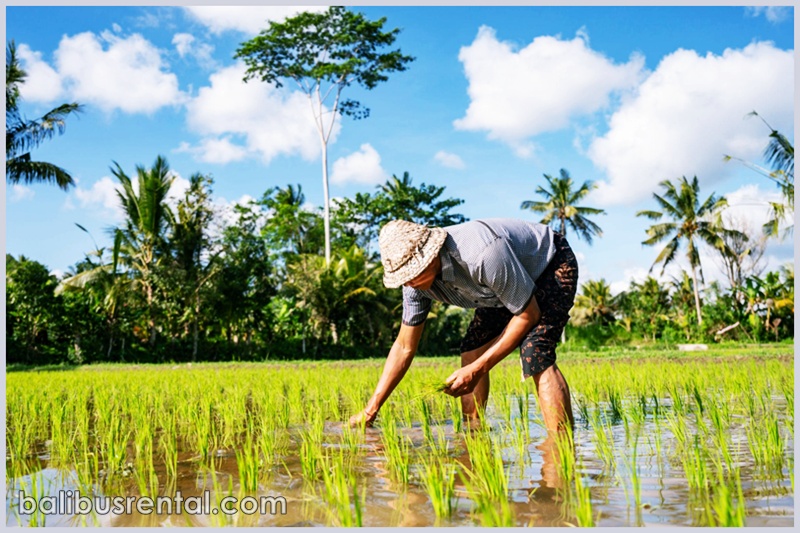
Bali Rice Fields
Rice fields are among the most beautiful and distinctive landscapes in Bali. The island’s famous green rice terraces, traditional irrigation systems, and peaceful rural villages are not only attractive tourist destinations but also an essential part of Balinese culture, religion, and everyday life. Rice plays a central role in the lives of the Balinese people, serving as their main staple food and an important offering in Hindu religious ceremonies.
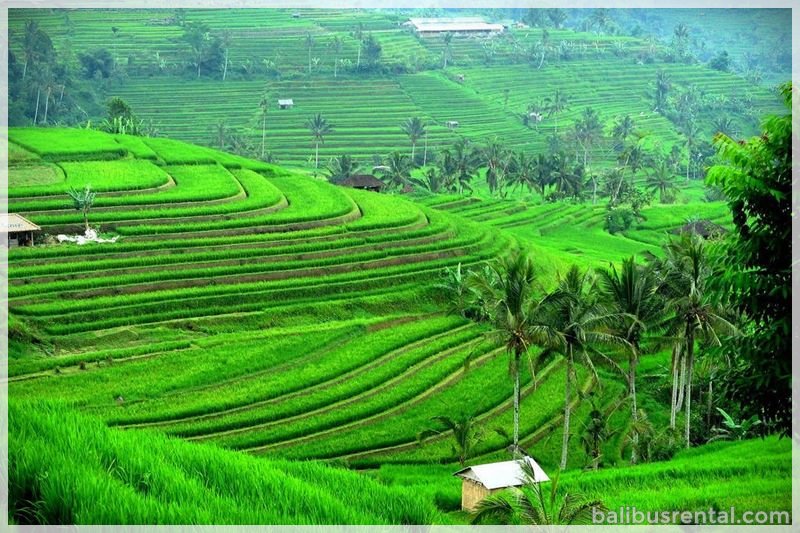
Across the island, visitors can discover magnificent rice terraces stretching across hillsides, valleys, and mountain slopes. These lush green landscapes reflect centuries of traditional farming knowledge and the close relationship between the Balinese people and their natural environment. Some of the most popular places to enjoy Bali’s rice field scenery include Tegalalang, Jatiluwih, Sidemen, and the rural countryside around Ubud.
Beyond their natural beauty, Bali’s rice fields represent a remarkable agricultural heritage. The traditional wet rice cultivation system, known as sawah, depends on carefully managed irrigation networks and a community-based farming organization called Subak. This system has helped Balinese farmers maintain productive agricultural land for generations.
The Importance of Rice Fields in Balinese Life
Rice is much more than an agricultural product in Bali. It is closely connected to the island’s social structure, religious beliefs, traditions, and daily activities. As the main food source for local communities, rice has traditionally been cultivated throughout the island, from coastal plains to highland valleys.
The fertile volcanic soil, tropical climate, abundant water resources, and traditional farming knowledge have made Bali particularly suitable for wet rice agriculture. The result is a landscape of beautifully arranged rice terraces that follow the natural contours of the hills and mountains.
Historically, Balinese farmers developed an advanced agricultural system that allowed them to produce rice efficiently while maintaining a balance between human activities and the surrounding environment.
Four important factors have contributed to the success of traditional rice farming in Bali:
- Fertile volcanic soil: Volcanic materials from Bali’s mountains have enriched the agricultural land with minerals and nutrients that support rice cultivation.
- Traditional agricultural knowledge: Generations of farmers have developed sophisticated techniques for managing water, preparing the soil, planting rice, and protecting crops.
- The Subak irrigation organization: This traditional community-based system coordinates water distribution, planting schedules, irrigation maintenance, and religious ceremonies.
- Rice varieties and seed selection: Over many generations, Balinese farmers have selected and developed rice varieties suited to local environmental conditions, productivity, and cultural preferences.
Together, these factors have created one of the most distinctive traditional agricultural landscapes in Indonesia.
About Rice and Traditional Balinese Rice Fields
Rice cultivation has significantly influenced both the social and physical landscape of Bali. The organization required to manage rice production has strengthened cooperation among village communities, while irrigation channels and terraced fields have transformed hillsides into productive agricultural areas.
The rice terraces are particularly impressive because they follow the natural shape of the land. From a distance, the fields look like enormous green steps descending along hillsides and valleys. Depending on the growing season, visitors may see bright green young rice plants, golden mature rice fields, or freshly harvested brown fields.
In the Balinese language and everyday Indonesian usage, several different words describe the stages of rice production:
- Padi: The growing rice plant in the field before harvesting.
- Gabah: Harvested rice grains that still have their outer husks.
- Beras: Uncooked rice grains after the husks have been removed.
- Nasi: Cooked rice, commonly served as the main part of a meal, such as nasi putih (plain rice) and nasi goreng (fried rice).
A traditional rice field is called sawah. These agricultural areas are generally supplied with irrigation water through a network of canals, channels, and small dams managed by local Subak organizations.
The Subak System – Traditional Irrigation in Bali
One of the most remarkable aspects of Balinese agriculture is the traditional irrigation organization known as Subak. It is a community-based system developed over many centuries to manage water distribution and coordinate rice cultivation among farmers.
Wet rice farming requires a reliable and carefully regulated water supply. A single farmer cannot easily manage the complicated irrigation network independently, especially when water must be shared among hundreds of rice fields located at different elevations.
For this reason, Balinese farmers developed the Subak system, which brings together farmers who receive irrigation water from the same water source or irrigation network.
The responsibilities of a Subak organization traditionally include:
- Distributing irrigation water fairly among participating rice farmers.
- Maintaining canals, waterways, dams, and irrigation structures.
- Coordinating planting and harvesting schedules.
- Organizing communal activities to maintain irrigation facilities.
- Managing water resources during periods of limited rainfall.
- Arranging religious ceremonies associated with agriculture and successful harvests.
A Subak organization generally includes farmers whose rice fields receive water through a shared irrigation network. Its membership is therefore based on agricultural land and water distribution rather than simply residential village boundaries.
How Subak Works in Balinese Communities
Subak has its own leadership structure and is independent of the traditional Banjar community organization.
The Banjar is primarily concerned with social, cultural, and community activities among residents, whereas Subak focuses on agricultural activities and irrigation management.
Consequently, Subak members do not necessarily belong to the same Banjar. A farmer may own or cultivate rice fields in several different locations, each receiving irrigation water from a different Subak network. In such circumstances, the farmer may participate in more than one Subak organization.
Traditionally, decisions concerning water distribution, planting schedules, canal maintenance, and other agricultural matters are discussed collectively. Subak members cooperate to ensure that irrigation water is distributed according to the needs and responsibilities of the farming community.
This system demonstrates the importance of cooperation and shared responsibility in Balinese society.
Subak and the UNESCO World Heritage Site
The Subak system is internationally recognized for its cultural and historical importance. In 2012, UNESCO inscribed the Cultural Landscape of Bali Province: the Subak System as a Manifestation of the Tri Hita Karana Philosophy on the World Heritage List.
Tri Hita Karana is a traditional Balinese philosophy emphasizing harmony among three relationships:
- Parhyangan: Harmony between humans and God.
- Pawongan: Harmony among human beings.
- Palemahan: Harmony between humans and the natural environment.
The Subak system reflects these principles through cooperation between farmers, religious ceremonies, and the responsible management of water and agricultural land.
This heritage makes Bali’s rice terraces much more than beautiful scenery. They are living examples of a traditional agricultural system that continues to shape the island’s cultural identity.
Traditional Rice Planting in Bali
Rice planting is an important stage of the agricultural cycle and traditionally involves cooperation among family members, neighbors, and other farmers.
Before planting begins, farmers prepare a small nursery area where rice seeds are sown and allowed to germinate. When the young rice plants reach a suitable size, they are carefully removed from the nursery and transported to the prepared rice fields.
Farmers traditionally plant the young seedlings by hand. Each seedling is placed in the soft, muddy soil at a suitable distance from neighboring plants to allow healthy growth.
Although this process requires considerable time and physical effort, traditional planting methods have been passed down through generations.
Today, some farmers continue to use traditional techniques, while others combine manual planting with modern agricultural equipment.
History of Traditional Rice Fields in Bali
Wet rice agriculture, known locally as sawah, has played an important role in Bali’s economy and society for more than a thousand years.
Historical evidence of rice cultivation can be found in ancient Balinese inscriptions. One early inscription dating from 882 AD refers to agricultural activities and rice cultivation, demonstrating the long history of farming on the island.
The development of traditional rice farming was supported by Bali’s fertile volcanic soil, tropical climate, and abundant water resources. However, natural fertility alone could not maintain productive agricultural land over many centuries.
Balinese farmers gradually developed methods of replenishing soil nutrients, managing irrigation, and maintaining agricultural productivity. Their knowledge of local environmental conditions helped create the sophisticated rice terrace systems that can still be seen today.
Traditional rice cultivation also influenced the development of villages, temples, irrigation structures, and community organizations throughout the island.
Traditional Preparation of Rice Fields
Preparing the soil is one of the most important stages of traditional wet rice cultivation in Bali. After the previous harvest, farmers begin preparing the fields for the next planting season.
Traditionally, organic materials, rice straw, plant remains, ash, and animal manure were used to help maintain soil fertility.
The preparation process generally involves several stages:
1. Clearing the Rice Fields
After harvesting, remaining rice stalks and unwanted vegetation are cleared from the fields. Plant materials may be returned to the soil or composted to provide organic matter.
2. Flooding the Fields
The fields are supplied with irrigation water until the soil becomes sufficiently wet and soft for ploughing.
3. Ploughing the Soil
Traditionally, farmers used buffaloes or cattle to pull wooden ploughs through the muddy fields. Today, mechanical cultivators and small tractors are also commonly used in many agricultural areas.
4. Adding Organic Fertilizer
Animal manure and other organic materials may be added to improve soil conditions and provide nutrients for the growing rice plants.
5. Leveling the Soil
After ploughing, the muddy soil is carefully leveled so that water can spread evenly throughout the field. Proper leveling helps young rice plants grow under relatively consistent conditions.
Once the preparation is complete, the rice fields are ready for planting.
The Growth Period of Rice Plants
After the young rice seedlings have been transplanted into the main fields, farmers must carefully monitor their growth.
Water management is particularly important during this period. The amount of water supplied to the fields is adjusted according to the development stage of the rice plants, local weather conditions, and irrigation availability.
Farmers also regularly inspect their fields for weeds, insects, and other pests that could damage the crops.
Traditional farming practices involve several activities during the growth period:
- Removing weeds that compete with rice plants for nutrients.
- Maintaining suitable water levels throughout the fields.
- Checking for insects, pests, and plant diseases.
- Repairing small irrigation channels when necessary.
- Monitoring the condition of the rice plants until they produce mature grains.
As the rice begins to develop grain heads, birds may become a serious problem. Farmers traditionally use scarecrows, bamboo poles, flags, ribbons, and wind-driven noise makers to discourage birds from eating the developing rice grains.
When the rice begins to ripen, farmers pay particular attention to protecting the harvest from birds and other animals.
Depending on the rice variety, local climate, and farming methods, the growing period can vary considerably.
Harvesting Rice in Bali
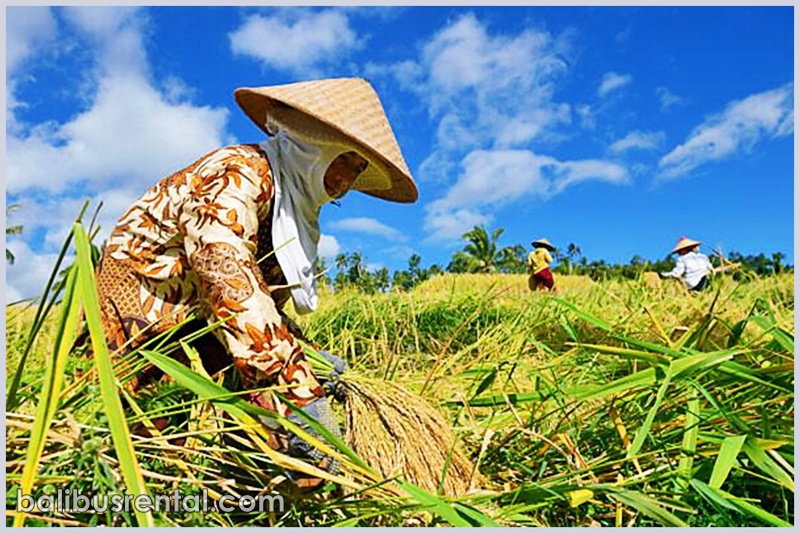
Rice harvesting is an important activity in traditional Balinese villages and is often carried out with the assistance of family members, neighbors, and other farmers.
Traditionally, harvesting was performed by hand using small harvesting knives. Farmers worked together across the rice fields, cutting the mature rice stalks and gathering the harvested plants into bundles.
This cooperative harvesting activity helped reduce the workload for individual farming families.
Once harvested, the rice stalks are collected and transported to storage areas or traditional rice barns. In the past, farmers often stored rice in bundles for extended periods, removing the grains as needed for household consumption or sale.
The harvested rice then undergoes several processes:
- Threshing: Separating the rice grains from the stalks.
- Drying: Reducing moisture content to prepare the grains for storage and milling.
- Hulling: Removing the outer husk to produce brown rice.
- Milling: Further processing the grains to produce white rice.
- Storage and distribution: Keeping the rice for household consumption or selling it in local markets.
Rice harvesting is not only an agricultural activity but also an important expression of community cooperation in traditional Balinese villages.
The Complete Process of Growing Rice in Bali
The traditional rice-growing process follows a continuous agricultural cycle, beginning after the previous harvest and continuing until the next crop is ready.
Although modern equipment has changed some farming practices, many rice-growing activities still follow traditional methods.
The main stages of rice cultivation include:
1. Preparing the Fields
After the previous harvest, the remaining vegetation is cleared and the soil is prepared. The fields are flooded and ploughed until the soil becomes soft and muddy.
2. Preparing the Rice Nursery
Rice seeds are planted in a small nursery area. The young plants are carefully maintained until they are strong enough to be transplanted.
3. Transplanting the Seedlings
When the seedlings reach the appropriate size, farmers transfer them individually into the prepared rice fields.
4. Maintaining the Rice Plants
Farmers regularly remove weeds, monitor water levels, and protect the crops from insects, diseases, and other pests.
5. Growing and Ripening
As the rice plants mature, their green leaves gradually develop grain heads. The fields eventually change color from bright green to golden yellow as the grains ripen.
6. Harvesting the Rice
When the rice is ready, farmers harvest the mature plants, separate the grains from the stalks, and prepare the rice for drying and storage.
This cycle is repeated according to the planting schedule and water availability managed by the local Subak organization.
Introduction of Modern Rice Farming Technology in Bali
Although traditional rice farming has been practiced in Bali for centuries, agricultural methods began to change significantly during the twentieth century.
Population growth increased the demand for rice, creating pressure on farmers to improve agricultural production.
From the 1970s onward, government agricultural intensification programs encouraged farmers to adopt modern farming technologies. These programs introduced improved rice varieties, chemical fertilizers, pesticides, insecticides, mechanical equipment, and modern rice milling facilities.
One of the main advantages of improved rice varieties was their shorter growing period. Some varieties could mature in approximately 90–100 days, compared with certain traditional varieties that required 160 days or more.
Improved seeds and agricultural inputs also offered the possibility of increasing rice production per hectare.
Government assistance and agricultural credit programs encouraged many farmers, particularly in southern Bali, to adopt these new techniques.
The Impact of Modern Technology on Traditional Rice Fields
Modern agricultural technology has helped many farmers increase productivity and reduce the time required for certain farming activities.
However, the introduction of modern farming methods also brought environmental and cultural challenges.
Intensive cultivation, excessive chemical fertilizer use, pesticide applications, and changes in planting schedules can affect soil quality, water resources, and the balance of traditional agricultural ecosystems.
These developments also created challenges for the traditional Subak system, particularly when planting schedules and water requirements changed.
Today, many Balinese farmers combine modern agricultural equipment with traditional knowledge and community-based irrigation management. Maintaining this balance is important for protecting the island’s agricultural heritage and ensuring the long-term sustainability of rice production.
Best Places to See Beautiful Rice Fields in Bali
Bali has many beautiful rice field landscapes that attract visitors from around the world. Some are famous for their spectacular terraced hillsides, while others offer peaceful countryside scenery and opportunities to experience traditional village life.
Here are some of the best places to visit if you want to enjoy Bali’s rice terraces.
1. Tegalalang Rice Terrace, Ubud
Tegalalang Rice Terrace is one of the most famous rice field attractions in Bali. Located north of Ubud in Gianyar Regency, this destination is well known for its dramatic green terraces, traditional irrigation channels, and beautiful valley views.
Visitors can walk along the rice field paths, enjoy the surrounding tropical scenery, take photographs, and relax at cafes overlooking the terraces.
2. Jatiluwih Rice Terraces, Tabanan
Jatiluwih is one of Bali’s most impressive rice terrace destinations and forms part of the UNESCO-listed cultural landscape associated with the Subak irrigation system.
Located in the highlands of Tabanan Regency, Jatiluwih offers extensive terraced rice fields surrounded by mountains and traditional farming villages.
The area is particularly attractive for walking, cycling, photography, and learning about traditional Balinese agriculture.
3. Sidemen Rice Fields, Karangasem
Sidemen is a peaceful countryside destination in eastern Bali, famous for its beautiful rice fields and traditional village atmosphere.
The landscape features green rice terraces, flowing irrigation channels, coconut trees, and magnificent views of Mount Agung on clear days.
Compared with some of Bali’s more popular tourist attractions, Sidemen offers a quieter environment for visitors who want to experience rural Bali.
4. Ubud Rice Fields, Gianyar
The countryside surrounding Ubud is filled with traditional rice fields, small villages, and scenic walking paths.
Visitors can explore the agricultural landscape around Campuhan, Sayan, Pejeng, and other surrounding villages. These areas offer opportunities to observe local farmers working in the fields and enjoy the peaceful atmosphere of the Balinese countryside.
Best Time to Visit Bali Rice Fields
Rice fields in Bali change their appearance throughout the agricultural cycle. Depending on the planting and harvesting schedules, visitors may experience different landscapes during their trip.
- Young rice plants: The fields are covered with fresh, bright green seedlings.
- Growing season: The terraces become increasingly lush as the rice plants develop.
- Ripening season: The fields gradually turn golden yellow, creating beautiful scenery for photography.
- After harvesting: The fields may appear brown or muddy while farmers prepare the land for the next planting season.
There is no single harvest season across the entire island because planting schedules differ between villages and Subak irrigation areas.
For the best experience, visitors should check local conditions before planning a trip. Early morning is particularly enjoyable because the temperature is cooler and the natural light is excellent for photography.
Experience the Beauty of Bali Rice Fields with a Private Driver
Exploring Bali’s rice terraces is a wonderful way to discover the island’s natural beauty, traditional agriculture, and local culture.
Many rice field destinations are located outside the main tourist areas, making private transportation a convenient option for visitors who want to explore several attractions in one day.
With a private car and experienced local driver, you can comfortably visit Tegalalang, Ubud, Jatiluwih, or other beautiful countryside destinations while enjoying the flexibility to stop for photographs and sightseeing along the way.
For families, couples, and groups traveling together, a private vehicle or minibus with a driver provides a practical way to discover Bali’s rural landscapes.
Bali Bus Rental offers private transportation services for sightseeing trips, countryside tours, and customized Bali excursions. Whether you are traveling with a small family or a larger group, you can arrange a suitable vehicle to explore the island’s beautiful rice terraces and traditional villages.
Discover the green landscapes of Bali and experience the fascinating agricultural heritage that has shaped the island for generations.