Gitgit Waterfall at Buleleng Regency
Gitgit Waterfall in Buleleng Regency, North Bali, is one of the island’s well-known natural attractions, famous for its cascading water, lush tropical rainforest, fresh mountain air, and peaceful surroundings. Located in Gitgit Village, Sukasada District, this scenic waterfall offers visitors an opportunity to experience Bali’s natural beauty away from the busy beaches and crowded tourist areas of southern Bali.
Surrounded by dense tropical vegetation, tall trees, coffee plantations, clove gardens, and other local crops, Gitgit Waterfall provides a refreshing escape for nature lovers, photographers, hikers, and travelers exploring the northern part of the island. The sound of flowing water, the cool mountain atmosphere, and the green landscape make it an appealing destination for anyone looking to discover another side of Bali.
Situated along the main road connecting Denpasar and Singaraja, Gitgit Waterfall is relatively easy to reach by car or motorbike. Its location on the mountainous route between central and northern Bali also makes it a convenient stop when traveling to Lovina Beach, Singaraja, Bedugul, or other attractions in Buleleng Regency.
Location of Gitgit Waterfall in North Bali
Gitgit Waterfall is located in Gitgit Village, Sukasada District, Buleleng Regency, Bali, Indonesia. The waterfall lies in the island’s central northern highlands, approximately 10 kilometers south of Singaraja, the principal town of Buleleng Regency. The distance from Denpasar is approximately 70 kilometers, although actual travel time depends on traffic and the chosen route.
The waterfall is situated at an elevation of around 300 meters above sea level, in an area characterized by tropical vegetation, agricultural land, and mountainous terrain. Compared with the hotter coastal areas of southern Bali, the surrounding highlands generally offer a cooler and more refreshing atmosphere.
Gitgit Waterfall is particularly convenient for visitors traveling along the Denpasar–Bedugul–Singaraja road. Travelers can combine a visit with other northern Bali destinations, including Lake Beratan, Ulun Danu Beratan Temple, the mountain village of Bedugul, and the coastal attractions around Lovina.
The Natural Beauty of Gitgit Waterfall
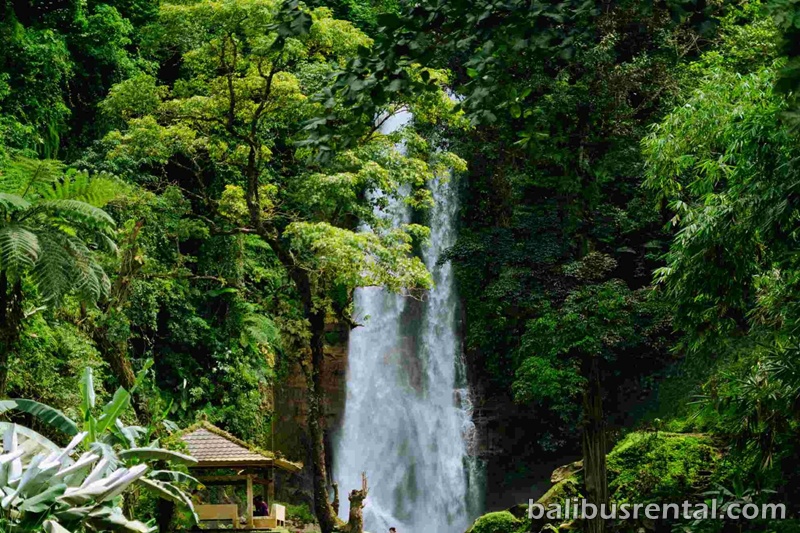
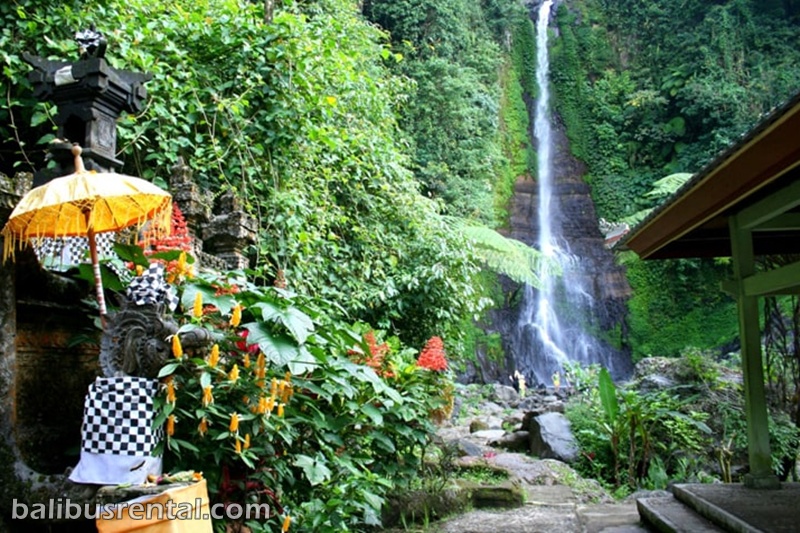
Gitgit Waterfall is known for its impressive cascade, which drops from a rocky cliff into a natural pool surrounded by tropical greenery. The waterfall is commonly described as approximately 35 meters high, although published descriptions sometimes give different measurements.
Water flows down the rocky hillside throughout the year, creating a picturesque scene that attracts both domestic and international visitors. The volume and appearance of the cascade can vary depending on seasonal rainfall, with the surrounding vegetation often appearing especially lush during and after the rainy season.
The atmosphere around the waterfall is one of its main attractions. Visitors can listen to the continuous rushing water, observe the tropical plants growing along the river, and enjoy the refreshing air beneath the forest canopy. Sunlight filtering through the trees creates beautiful contrasts between the dark rocks, white flowing water, and vibrant green foliage.
For photographers, Gitgit Waterfall offers opportunities to capture the cascade from different viewpoints along the walking trail. The natural surroundings also make it a pleasant destination for travelers who enjoy quiet scenery, outdoor exploration, and nature photography.
Walking Trail to Gitgit Waterfall
Reaching Gitgit Waterfall involves a walk from the roadside entrance to the main cascade. The approach follows a narrow path through a green landscape, passing small souvenir shops, refreshment stalls, gardens, and tropical vegetation.
Visitors must descend a series of steps and follow a winding trail toward the waterfall. Although the distance is not especially long, some sections may be steep, uneven, or slippery, particularly after rain. Comfortable walking shoes and a reasonable level of mobility are helpful when exploring the area.
The walk itself is part of the experience. Along the way, visitors can enjoy views of the surrounding hills, listen to birds and flowing water, and observe the vegetation growing throughout the valley. The trail gradually leads into a more secluded natural setting, where the sound of the waterfall becomes increasingly noticeable.
Upon reaching the main viewing area, visitors are rewarded with a view of the water plunging down the rocky cliff. The cool spray and peaceful surroundings provide a welcome break from the tropical heat.
Visitors should take care on wet steps, avoid climbing unstable rocks, and follow local instructions regarding swimming and access to the water.
Exploring the Other Waterfalls Around Gitgit
The Gitgit area is associated with several waterfalls and smaller cascades, making it an interesting destination for travelers who want to explore more than one natural attraction. Depending on the route taken, visitors may encounter additional waterfalls, streams, and scenic forest trails in the surrounding countryside.
The main Gitgit Waterfall is the most familiar attraction, but other nearby cascades provide different views of North Bali’s mountainous landscape. Some require additional walking, and the distance and difficulty depend on the particular waterfall and access route.
Visitors should confirm local trail conditions before attempting longer walks, especially during the rainy season. Not every waterfall in the wider Gitgit area is reached from the same entrance, so it is advisable to check directions locally rather than assume that all cascades are connected by one continuous trail.
For travelers who enjoy hiking, exploring the surrounding area can provide a more immersive experience of Bali’s tropical highlands.
Tropical Forest, Plantations, and Wildlife
One of the distinctive features of Gitgit Waterfall is its lush natural environment. The surrounding countryside supports a variety of tropical plants and agricultural crops, including coffee, cloves, fruit trees, and other vegetation commonly grown in Bali’s cooler inland regions.
These plantations form part of the traditional agricultural landscape of Gitgit Village. The combination of cultivated land, forested slopes, streams, and steep hillsides gives the area its characteristic green appearance.
Visitors may occasionally see long-tailed macaques or other wildlife in the surrounding environment. However, animal sightings are not guaranteed, and visitors should avoid feeding or approaching wild animals. Keeping food securely stored and observing wildlife from a respectful distance helps protect both visitors and the animals.
The natural setting also offers opportunities to appreciate the relationship between local communities and their environment. Agriculture remains an important part of village life, while the waterfall provides an additional source of tourism activity and local income.
History of Gitgit Waterfall as a Tourist Attraction
Gitgit Waterfall has long been a natural landmark in the mountainous countryside of North Bali. Before becoming a recognized tourist destination, the surrounding paths formed part of the local network used by residents to travel between settlements, agricultural areas, and neighboring regions.
The mountain road connecting southern and northern Bali helped improve access to the area. As transportation became easier and interest in Bali’s natural attractions increased, Gitgit Waterfall gradually attracted more visitors seeking scenic destinations outside the island’s major resort centers.
The waterfall is reported to have been opened as a tourist attraction in 1975. Its development helped introduce the natural beauty of Gitgit Village to a wider audience and created opportunities for local businesses, including parking services, small shops, refreshments, and souvenir sales.
Today, Gitgit Waterfall remains a popular stop for visitors traveling between Denpasar, Bedugul, Singaraja, and the northern coast. Its appeal lies in its accessibility, attractive cascade, and natural surroundings rather than large-scale tourism facilities.
Bhuwana Pangkung Bangka Monument
Visitors exploring Gitgit Village and the surrounding area may also be interested in the historical heritage of Buleleng Regency. One landmark associated with local history is the Bhuwana Pangkung Bangka Monument, which commemorates the struggle of local people against Dutch colonial rule.
The monument represents an important part of the area’s historical memory and serves as a reminder of the sacrifices made by earlier generations during the struggle for independence. It also provides an opportunity to understand that North Bali’s attractions extend beyond natural scenery to include historical and cultural landmarks.
The monument is located in the broader Gitgit and Sukasada area, although its precise distance and route should be confirmed locally before visiting. Travelers interested in Bali’s history can consider including the site in a wider excursion through Buleleng, together with traditional villages and other historical places around Singaraja.
Facilities at Gitgit Waterfall
Gitgit Waterfall offers basic visitor facilities that make a short nature excursion more convenient. Facilities and services may vary, but visitors can generally expect some of the following around the entrance and access road:
- Parking area: Space for visitors arriving by private car or motorbike, subject to local arrangements.
- Small restaurants and refreshment stalls: Places to purchase drinks, snacks, or simple meals near the entrance.
- Souvenir shops: Small local businesses selling souvenirs and other items for visitors.
- Walking paths and steps: A trail leading from the entrance down toward the main waterfall.
- Resting spots: Places to pause during the walk and enjoy the surrounding landscape.
Visitors should bring drinking water, wear suitable footwear, and carry any personal necessities before beginning the walk. Facilities directly beside the waterfall may be limited, so it is best to prepare before descending the trail.
Best Time to Visit Gitgit Waterfall
Gitgit Waterfall can be visited throughout the year, but the experience varies with the weather.
Dry season, generally April to October: These months often provide more convenient walking conditions and a lower chance of heavy rainfall. The trail may be easier to navigate, although the waterfall’s flow can vary with recent rainfall.
Rainy season, generally November to March: The surrounding forest becomes especially green, and the waterfall may have a stronger flow. However, heavy rain can make steps and paths slippery and may increase water levels. Visitors should check local conditions before entering the trail.
For a more comfortable visit, consider arriving in the morning, when the surroundings may feel cooler and the area may be quieter than during busier sightseeing periods. Weather in Bali’s mountainous regions can change quickly, so visitors should remain flexible with their plans.
Travel Tips for Visiting Gitgit Waterfall
To make the most of your visit, keep the following practical recommendations in mind:
- Wear comfortable walking shoes. The route includes steps and uneven surfaces, which may become slippery after rainfall.
- Bring drinking water. The walk can be tiring in humid conditions, even in the cooler highlands.
- Protect your belongings. A waterproof bag can help keep phones, cameras, and other valuables dry from waterfall spray or rain.
- Respect the natural environment. Avoid littering, damaging plants, or disturbing wildlife.
- Follow local safety instructions. Water conditions can change, and swimming may not be safe in certain areas.
- Allow enough time. Plan additional time for the descent, photography, rest stops, and the return walk uphill.
- Check local entrance arrangements. Ticket prices, opening hours, and available facilities may change, so confirm current details before traveling.
Visitors should also be prepared for the uphill return journey. Although the descent may feel easy, climbing back to the road can require extra effort, particularly for families with young children or travelers who are not accustomed to walking on steep paths.
How to Get to Gitgit Waterfall from Denpasar
Gitgit Waterfall is accessible by private car, motorbike, or a vehicle with a driver. From Denpasar, the usual journey follows the route through central Bali toward Bedugul before continuing down the mountain road to Singaraja. The waterfall entrance is located near the main road in Gitgit Village.
The journey from Denpasar generally takes around two to three hours, depending on traffic, weather, road conditions, and stops along the way. Travelers departing from Ubud may also reach the waterfall by driving through the central highlands, although travel time varies according to the route.
For visitors who prefer a more flexible itinerary, hiring a private car with a driver can be convenient. A driver familiar with North Bali can help coordinate stops at Gitgit Waterfall, Bedugul, Lake Beratan, Ulun Danu Beratan Temple, and other attractions along the route.
Travelers staying in Lovina or Singaraja can generally reach Gitgit Waterfall in a shorter drive than those departing from southern Bali.
Combine Gitgit Waterfall with Other Bali Attractions
Gitgit Waterfall is well suited to a day trip through the northern and central highlands. Visitors can combine the waterfall with other attractions according to their starting point, available time, and interests.
Nearby and regional destinations include:
- Lake Beratan: A scenic mountain lake in Bedugul surrounded by green hills.
- Ulun Danu Beratan Temple: A well-known Balinese water temple on the shore of Lake Beratan.
- Bedugul: A highland destination known for its cooler climate, gardens, lake scenery, and agricultural landscapes.
- Singaraja: The historic principal town of Buleleng, with colonial-era heritage and a distinctive northern Bali atmosphere.
- Lovina Beach: A coastal destination known for its calm waters, black-sand beaches, and dolphin-watching excursions.
- Other waterfalls in Buleleng: The wider region contains numerous waterfalls, each offering a different landscape and walking experience.
Because the attractions are spread across a mountainous region, it is advisable to plan a realistic itinerary rather than attempt to visit too many places in one day.
Bhuwana Pangkung Bangka Monument & the History of Gitgit Waterfall
In addition to its natural attractions, the Gitgit area in Sukasada District, Buleleng Regency, is associated with important historical landmarks that reflect the local community’s past. One of these is the Bhuwana Pangkung Bangka Monument, which commemorates the struggle of local residents against Dutch colonial rule. Located in the hilly countryside around Gitgit, the monument serves as a reminder of the courage and sacrifices of earlier generations who fought to defend their homeland.
The monument is situated approximately 17 kilometers from Singaraja, although the exact distance may vary depending on the route taken. Its hillside setting reflects the mountainous character of North Bali, where villages, plantations, rice fields, and winding roads form part of the traditional landscape. Visitors interested in Balinese history can include this monument in a broader exploration of the cultural and historical heritage of Buleleng Regency.
Facilities and Scenic Views Around Gitgit Waterfall
Gitgit Waterfall provides basic facilities for visitors, including a parking area, small restaurants or refreshment stalls, and local art and souvenir shops. These facilities make it convenient for travelers to stop, rest, purchase refreshments, and browse locally produced souvenirs before or after visiting the waterfall.
The surrounding countryside also offers attractive views of green rice terraces, tropical vegetation, rolling hills, and, from suitable viewpoints, the distant coastline of Buleleng. Visitors can take a break along the route to appreciate the scenery and enjoy the cooler atmosphere of the highlands. The combination of agricultural landscapes and mountain views adds to the appeal of visiting Gitgit Waterfall.
Walking Trail and Historical Background of Gitgit Waterfall
To reach the main cascade, visitors follow a designated walkway that descends from the roadside entrance through the surrounding greenery. The path includes steps and sections of uneven terrain, leading through a landscape of tropical plants and traditional agricultural land before arriving at the waterfall.
The route also reflects the area’s historical development. Paths through the mountainous countryside were important for local residents traveling between villages, plantations, and neighboring regions. Some routes in North Bali developed or were used during the Dutch colonial period, although the precise history of the present waterfall trail would require further historical confirmation.
Gitgit Waterfall was reportedly opened to visitors as a tourist attraction in 1975, helping introduce the natural beauty of North Bali to a wider audience. Since then, it has become a recognized destination for travelers exploring the region between Denpasar, Bedugul, Singaraja, and Lovina.
Today, the combination of the waterfall, forested walking trail, local businesses, and surrounding countryside makes Gitgit an appealing destination for nature enthusiasts and cultural travelers alike. Visitors can enjoy the refreshing cascade while also discovering the agricultural traditions, historical landmarks, and scenic landscapes that characterize Buleleng Regency.
Why Visit Gitgit Waterfall in Bali?
Gitgit Waterfall offers a different perspective on Bali, away from the island’s busy shopping streets, beach clubs, and southern resort areas. Its cascading water, tropical forest, green plantations, and mountain scenery make it an appealing destination for nature lovers and travelers interested in exploring rural Bali.
The attraction is also relatively accessible from the main road between central and northern Bali, allowing visitors to incorporate it into a wider sightseeing trip. Whether you are traveling with friends, enjoying a private tour, or exploring the island independently, Gitgit Waterfall provides an opportunity to experience the natural landscapes of Buleleng Regency.
For those planning a Bali holiday, a visit to Gitgit Waterfall can be combined with Bedugul, Lake Beratan, Singaraja, or Lovina to create a varied itinerary featuring waterfalls, temples, mountain scenery, and northern coastal attractions.
Gitgit Waterfall is a memorable destination for anyone wishing to discover the natural beauty of North Bali. Its refreshing atmosphere, scenic walking trail, and lush surroundings make it a worthwhile stop for visitors exploring the island beyond its most famous southern beaches.
Gitgit Waterfall Entrance Fee and Visitor Information
The entrance ticket for Gitgit Waterfall in Buleleng Regency, North Bali
- IDR 45,000 per international visitor
- IDR 15,000 per domestic visitor
Visitors arriving by private vehicle should also prepare a small amount of money for parking. The following fees and visitor information can help you plan your trip to this beautiful natural attraction in Bali.
Additional Parking Fees
- Car parking: IDR 5,000
- Motorcycle parking: IDR 2,000
Essential Visitor Tips
- Payment method: Bring cash in Indonesian Rupiah (IDR), preferably in small denominations, to make payment easier.
- Opening hours: Gitgit Waterfall is listed as open daily from 8:00 AM to 5:00 PM. Check locally before visiting, as operating hours may change.
- Local guides: Hiring a guide is generally optional if you are comfortable following the marked walking trail. You can explore the route independently, but local assistance may be helpful if you want additional information about the area.
- Suitable footwear: Wear comfortable walking shoes because the trail includes steps and uneven surfaces that can become slippery after rain.
For the most enjoyable experience, consider visiting in the morning when the weather is often cooler and you have more time to explore the surrounding natural scenery.
Planning your visit to Gitgit Waterfall? You can combine your trip with other attractions in North Bali, including nearby waterfalls, Bedugul, Lake Beratan, or Lovina Beach.