Puri Saren Ubud – The Historic Royal Palace in the Heart of Bali
Puri Saren Ubud, widely known as Ubud Royal Palace, is one of the most famous historical and cultural landmarks in Ubud, Bali. Located in the heart of Ubud town, Gianyar Regency, this traditional Balinese royal residence is an important destination for visitors who want to discover Bali’s royal heritage, traditional architecture, and rich artistic traditions.
Situated along Jalan Raya Ubud, near the popular Ubud Art Market, Puri Saren occupies a strategic location surrounded by shops, restaurants, art galleries, and other cultural attractions. Its central position makes the palace an ideal stop for travelers exploring Ubud on a day trip or as part of a longer Bali sightseeing itinerary.
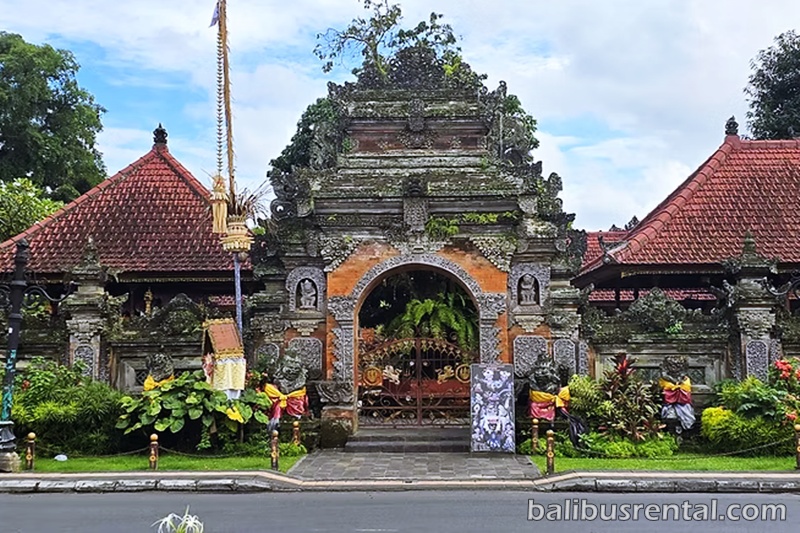
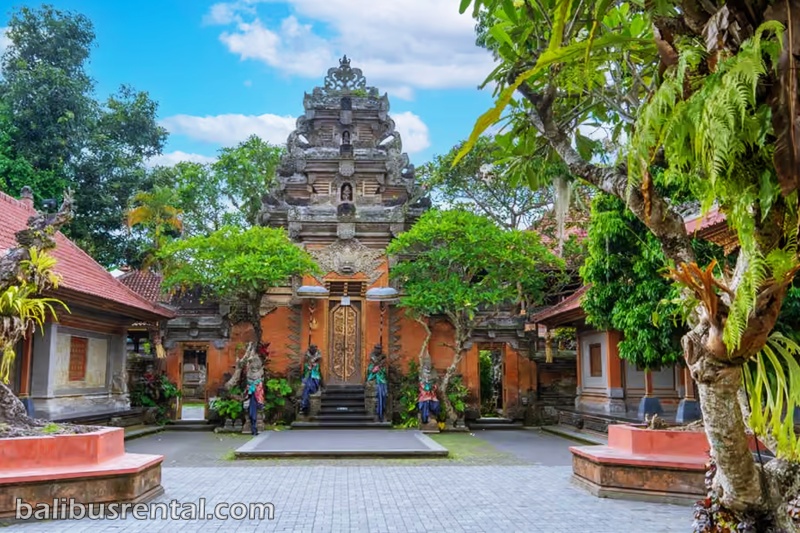
The palace is known for its beautifully decorated gates, traditional Balinese courtyards, stone carvings, ornamental walls, and intricately designed pavilions. These architectural features reflect the artistic skills of Balinese craftsmen and the cultural values that have shaped the island for generations.
Although Puri Saren Ubud is closely associated with the royal family of Ubud, it is also an important cultural landmark that introduces visitors to the historical relationship between Balinese royalty, Hindu traditions, performing arts, and community life.
History of Puri Saren Ubud
The history of Puri Saren Ubud is closely connected to the development of Ubud as one of Bali’s most important cultural centers. For generations, the royal palace served as the residence of the rulers of Ubud and played a significant role in local administration, religious ceremonies, and the preservation of traditional arts.
The palace became particularly important during the nineteenth and early twentieth centuries, when Ubud developed a stronger reputation as a center for Balinese culture, literature, painting, dance, and music. Members of the royal family supported local artists, musicians, dancers, and craftsmen, helping traditional artistic practices flourish within the community.
During the early twentieth century, Ubud attracted increasing attention from foreign artists and cultural visitors. The relationship between local royal patrons and visiting artists contributed to the growth of Ubud’s artistic reputation. Traditional Balinese art continued to develop while remaining closely connected to religious beliefs, village customs, and everyday life.
Today, Puri Saren Ubud remains a symbol of the town’s royal heritage. Its historic buildings and ceremonial spaces provide a glimpse into the traditions of Balinese palace life, while its cultural activities help maintain the connection between Ubud’s past and present.
Traditional Balinese Architecture at Puri Saren
One of the main attractions of Puri Saren Ubud is its traditional Balinese architecture. Rather than resembling a single large European-style palace, the complex consists of a series of courtyards, pavilions, gateways, and enclosed spaces arranged according to traditional architectural principles.
Visitors can admire several distinctive features, including:
- Ornamental entrance gates: Traditional gateways decorated with elaborate carvings and sculptural details.
- Stone carvings: Decorative motifs inspired by Hindu mythology, nature, and Balinese artistic traditions.
- Traditional pavilions: Open-sided structures used for gatherings, ceremonies, and other activities.
- Courtyards and gardens: Spaces that connect different sections of the palace and contribute to its distinctive atmosphere.
- Decorative walls and shrines: Architectural elements reflecting the relationship between Balinese design, Hindu beliefs, and ceremonial life.
Balinese architecture often reflects the importance of harmony between people, nature, and the spiritual world. The arrangement of buildings, courtyards, and sacred spaces is influenced by traditional concepts of balance and orientation.
The palace therefore offers more than an attractive setting for photographs. It provides an opportunity to appreciate the craftsmanship and cultural principles behind traditional Balinese architecture.
Puri Saren Ubud and the Royal Heritage of Bali
Puri Saren Ubud represents an important part of Bali’s traditional social and cultural structure. Historically, Balinese royal palaces were not simply private residences. They were also centers of community leadership, cultural patronage, ceremonies, and artistic activities.
The royal family of Ubud helped support the development of local dance, music, painting, and other traditional art forms. These activities contributed to the area’s reputation as a destination for people interested in Balinese culture.
Even today, royal palaces throughout Bali remain closely associated with community traditions and ceremonial events. Their significance extends beyond their buildings to include the customs, artistic knowledge, and historical memories preserved by local families.
For visitors, learning about Puri Saren Ubud offers a deeper understanding of how royal heritage has influenced the identity of Ubud and helped shape its reputation as one of Bali’s leading cultural destinations.
Traditional Balinese Dance Performances at Ubud Royal Palace
Puri Saren Ubud is also well known as a venue for traditional Balinese dance performances. In the evening, the palace may host performances featuring classical Balinese dances accompanied by a live gamelan orchestra, depending on the scheduled program.
These performances offer visitors an opportunity to experience Bali’s performing arts in a traditional architectural setting. Dancers wear elaborate costumes, ornate headdresses, and expressive makeup, while their movements and facial expressions communicate stories drawn from Hindu epics, mythology, and local traditions.
The accompanying gamelan ensemble produces a distinctive combination of rhythmic percussion, metallophones, gongs, and other traditional instruments. The music and dance work together to create a theatrical experience that reflects Bali’s rich artistic heritage.
Performance programs can vary by date and organizer, so visitors should check the current schedule and ticket arrangements before attending. An evening dance performance can be a memorable addition to a cultural tour of Ubud.
Puri Saren Ubud and the Artistic Tradition of Ubud
Ubud is internationally recognized for its painting, woodcarving, sculpture, dance, and traditional music. Puri Saren has long been associated with this artistic environment through the historical role of royal patronage and the preservation of local cultural traditions.
The surrounding streets are filled with art galleries, handicraft shops, boutiques, and cultural venues. Visitors can explore works created by Balinese artists, discover traditional crafts, and learn more about the artistic techniques passed down through generations.
The palace also provides a useful starting point for exploring other cultural attractions in Ubud, including local museums, temples, traditional villages, and scenic countryside.
For travelers interested in Balinese culture, combining a visit to Puri Saren with nearby art galleries and a traditional dance performance offers a more complete introduction to Ubud’s cultural identity.
Location of Puri Saren Ubud
Puri Saren Ubud is located on Jalan Raya Ubud in central Ubud, Gianyar Regency, Bali, Indonesia. Because it is situated in the town center, the palace is easy to combine with other popular attractions and shopping areas.
Its central location makes it convenient for visitors staying in Ubud as well as travelers arriving from other parts of Bali.
The palace is approximately 35–40 kilometers from Denpasar, although actual travel times depend on traffic and the starting point. From Ngurah Rai International Airport, the journey commonly takes around 1.5 to 2 hours, but congestion can make the trip longer.
Travelers visiting from southern Bali destinations such as Kuta, Seminyak, Canggu, Jimbaran, or Nusa Dua can include Puri Saren Ubud in a full-day sightseeing itinerary.
Nearby Attractions to Visit
One advantage of visiting Puri Saren Ubud is its proximity to several well-known attractions.
Ubud Art Market
Located across the road from the royal palace, Ubud Art Market is a popular place to browse traditional handicrafts, woven bags, clothing, souvenirs, paintings, and locally made decorative items. Bargaining may be possible at some stalls.
Saraswati Temple
Pura Taman Saraswati is a beautiful Hindu temple associated with Saraswati, the goddess of knowledge, learning, and the arts. It is known for its lotus pond, decorative entrance, and traditional Balinese architectural details.
Sacred Monkey Forest Sanctuary
Situated in the southern part of Ubud, this protected forest sanctuary is home to long-tailed macaques, ancient trees, and several temple structures. Visitors should follow the sanctuary’s rules and avoid feeding or touching the monkeys.
Ubud Palace Area and Central Ubud
The streets surrounding the palace contain restaurants, cafes, galleries, traditional craft shops, and cultural venues. Walking through the town center allows visitors to experience the lively atmosphere of Ubud.
Goa Gajah and Other Cultural Sites
Travelers with additional time can visit other historical and cultural attractions around Ubud, including Goa Gajah, known as the Elephant Cave, and several traditional temples and heritage sites in the surrounding Gianyar area.
These attractions can be combined into a customized Ubud sightseeing tour, depending on available time and personal interests.
Best Time to Visit Puri Saren Ubud
Puri Saren Ubud can be visited throughout the year. Morning visits are often suitable for travelers who want to explore the palace grounds, admire the architecture, and take photographs before the central streets become busier.
Afternoon visits can be combined with shopping at Ubud Art Market, exploring nearby temples, or enjoying lunch at one of the many restaurants in the town center.
Visitors interested in traditional Balinese dance may prefer to visit in the late afternoon or evening, provided a performance is scheduled for that day.
Bali has a tropical climate, so occasional rain is possible throughout the year. Comfortable walking shoes, light clothing, sun protection, and drinking water can make the visit more enjoyable.
Visitor Etiquette and Cultural Respect
Puri Saren Ubud is a historical royal complex with continuing cultural significance. Visitors should respect any restricted areas, ceremonial activities, and instructions provided by staff or local representatives.
When visiting temples or attending religious events nearby, modest clothing may be required, and a sarong or sash may be necessary. Photography should be carried out respectfully, particularly when ceremonies or private activities are taking place.
Not every part of a royal palace is necessarily open to the public. Visitors should remain within designated visitor areas and follow local guidance.
By respecting local customs, travelers can enjoy the palace while helping preserve Bali’s cultural heritage.
Explore Puri Saren Ubud with a Bali Sightseeing Tour
Puri Saren Ubud is an excellent destination for visitors who want to experience Bali’s history, architecture, performing arts, and traditional culture. Its central location makes it easy to combine with the Ubud Art Market, Saraswati Temple, local museums, restaurants, and other attractions.
For travelers staying in southern Bali, a private car with a driver or a minibus charter can provide a convenient way to explore Ubud and its surrounding countryside. Groups and families can plan a flexible itinerary that includes royal heritage, temples, rice terraces, local villages, and traditional Balinese arts.
Whether you are interested in history, photography, architecture, shopping, or cultural performances, a visit to Puri Saren Ubud provides an opportunity to discover another side of Bali beyond its beaches and resort areas.
Conclusion
Puri Saren Ubud, or Ubud Royal Palace, is one of the most recognizable cultural landmarks in central Bali. With its traditional architecture, royal history, artistic heritage, and connection to Balinese dance, the palace offers visitors a meaningful introduction to the culture of Ubud.
Its location opposite Ubud Art Market and close to other popular attractions makes it an easy addition to a Bali sightseeing itinerary. For anyone interested in Balinese history and traditions, Puri Saren Ubud is a worthwhile stop when exploring the island’s cultural heart.
Puri Saren Ubud Entrance Fee and Ticket Prices
Visiting the front courtyards of Puri Saren Agung, also known as Ubud Royal Palace, is generally free during daytime visiting hours, typically between 7:00 AM and 6:00 PM. Visitors can admire the traditional Balinese architecture, decorative stone carvings, and historic palace surroundings.
Entrance Fees and Other Costs
- Daytime Admission: Free of charge (IDR 0) for the accessible palace courtyard areas.
- Traditional Balinese Dance Performances: Tickets are approximately IDR 100,000 per person for evening shows featuring traditional performances such as Legong dance, Barong dance, or Ramayana Ballet. Performances commonly begin around 7:30 PM, depending on the schedule.
- Parking Fees: Motorbike parking may be free or subject to local charges, while car parking may cost around IDR 10,000. Fees can vary depending on the parking location.
- Where to Buy Dance Tickets: Evening performance tickets may be purchased at the palace entrance or from authorized ticket sellers along Jalan Raya Ubud, often from around 5:00 PM. Carrying cash is advisable.
Tips for Visiting Ubud Royal Palace
For a more enjoyable visit, arrive during the daytime to explore the palace grounds and appreciate its traditional architecture. If you wish to experience Balinese performing arts, consider returning in the evening for a traditional dance show. Since entrance arrangements, ticket prices, and performance schedules may change, confirm the latest details locally before your visit.
After exploring Puri Saren Ubud, you can also visit the nearby Ubud Art Market, where you will find traditional handicrafts, souvenirs, clothing, and locally made products.