Tanah Lot Temple (Sea Temple)
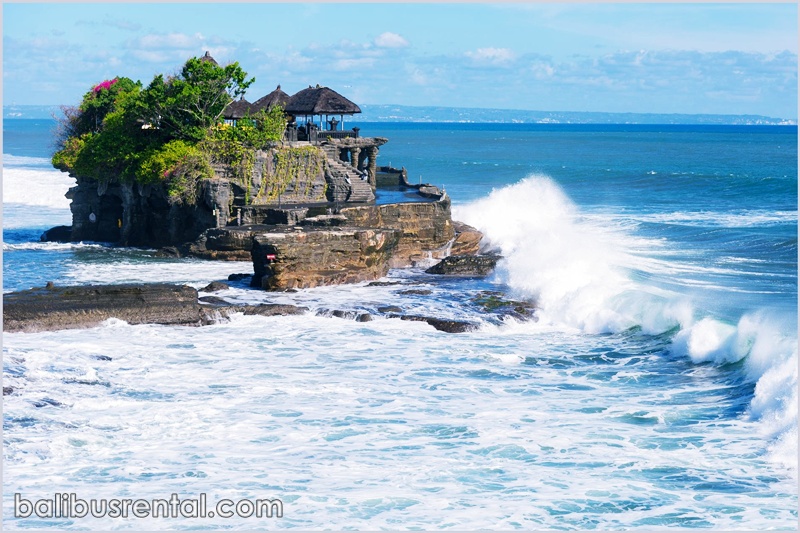
Tanah Lot Temple (Pura Tanah Lot) is one of the most famous Hindu temples in Bali and among the island’s most popular tourist attractions. Located on the beautiful west coast of Bali, this iconic sea temple is renowned for its dramatic ocean setting, spectacular sunset views, unique rock formations, and deep spiritual significance in Balinese Hindu culture.
Tanah Lot Temple is situated in Beraban Village, Kediri District, Tabanan Regency, approximately 30 km west of Denpasar City and around 11 km south of Tabanan town. Surrounded by the Indian Ocean, the temple stands on a large offshore rock formation, creating one of the most recognizable coastal landscapes in Bali.
The name Tanah Lot comes from two Balinese words: Tanah, meaning land or earth, and Lot or Lod, meaning sea. Together, Tanah Lot can be interpreted as “land in the sea” or “a small island floating on the ocean.” This name perfectly describes the temple’s distinctive location, especially during high tide when the surrounding rock becomes separated from the mainland by seawater.
The History and Legend of Tanah Lot Temple
According to Balinese historical tradition, Tanah Lot Temple is closely associated with the arrival of the Hindu priest Dang Hyang Nirartha in Bali during the 16th century. He was an important religious figure who traveled throughout the island to spread and strengthen Hindu teachings.
Legend says that during his journey along the southern coast of Bali, Dang Hyang Nirartha discovered a beautiful rocky formation surrounded by the ocean. He considered the location a spiritually powerful place and encouraged the local community to establish a sacred temple there.
According to local tradition, a village leader initially opposed his presence. Dang Hyang Nirartha then demonstrated his spiritual power by moving a large rock formation into the sea and transforming his sash into guardian snakes to protect the sacred location.
These stories have become an important part of the cultural heritage surrounding Tanah Lot Temple. Today, the temple remains a significant place of worship for Balinese Hindus as well as a major cultural attraction for visitors from around the world.
The area is also believed to have been regarded as sacred during earlier periods, with historical references to ancient stone structures and menhirs suggesting that the location may have had religious significance before the establishment of the present temple.
The Architecture and Religious Significance of Tanah Lot Temple
Tanah Lot Temple has a distinctive architectural setting because it was constructed on an irregular offshore rock formation. Unlike many Balinese temples built on extensive courtyards, the natural shape and limited space of the rock influence the temple’s layout.
The temple is dedicated to Dewa Baruna, also known as Bhatara Segara, the Hindu deity associated with the ocean and sea power. Local Hindu devotees worship here to seek blessings, protection, and harmony with the natural elements.
One of the most important structures is the main multi-tiered shrine, traditionally described as having five levels, dedicated to the deity of the sea. Another three-tiered shrine in the northern section is associated with the worship of Dang Hyang Nirartha.
Tanah Lot is also recognized as an important Dang Kahyangan temple, a category of sacred temples associated with the spiritual journeys of important Hindu religious figures in Bali.
Its religious importance can be understood through two main functions:
-
Dang Kahyangan Temple: Tanah Lot is connected with the spiritual history of Dang Hyang Nirartha and is an important sacred destination for Balinese Hindu devotees, particularly those from Tabanan and surrounding areas.
-
Segara Temple: It serves as a place of worship for Bhatara Segara, the deity associated with the ocean, reflecting the important relationship between Balinese Hindu spirituality and the sea.
The temple is also part of Bali’s wider network of sacred coastal temples, which are believed to help maintain spiritual balance and protect the island.
The Spectacular Sunset at Tanah Lot Temple
One of the main reasons Tanah Lot Temple is so popular among international and domestic tourists is its breathtaking sunset scenery.
In the late afternoon, visitors gather around the coastal viewpoints to enjoy the beautiful sight of the sun slowly disappearing behind the Indian Ocean. The temple’s silhouette against the orange, golden, and reddish sky creates an unforgettable landscape and one of Bali’s most photographed sunset scenes.
The surrounding cliffs, crashing ocean waves, and offshore rock formations provide excellent opportunities for photography. During low tide, visitors can walk closer to the base of the temple rock, while during high tide, the temple appears to float independently in the ocean.
For the best sunset experience, it is recommended to arrive around 4:00–4:30 PM. This gives visitors enough time to explore the temple complex, walk along the coastal pathways, discover the surrounding viewpoints, and find a comfortable location before sunset.
Because Tanah Lot is one of Bali’s busiest tourist attractions, arriving earlier is especially recommended during weekends, public holidays, and the peak holiday season.
The Sacred Sea Snakes of Tanah Lot
One of the most interesting attractions around Tanah Lot Temple is the presence of sacred sea snakes, which are traditionally believed by local people to guard the temple from negative influences and evil spirits.
These snakes are generally black and white in color and are associated with local legends about Dang Hyang Nirartha. According to traditional belief, they were created to protect the sacred temple and its surrounding waters.
The snakes are commonly identified as sea kraits, a type of venomous sea snake that can be found in coastal environments around Bali. They have distinctive dark bands across their bodies and are adapted to living both in the sea and on land.
Although their venom is highly dangerous, sea kraits are generally not aggressive toward humans and bites are uncommon. Visitors should never attempt to touch, handle, or disturb them.
For many Balinese people, these snakes are considered sacred guardians and are an important part of the spiritual identity and folklore of Tanah Lot.
Holy Water at Tanah Lot Temple
Another interesting feature of Tanah Lot is the presence of a natural freshwater spring near the base of the temple rock. Despite being surrounded by seawater, this spring produces fresh water and is considered sacred by local Hindu devotees.
The holy water is traditionally used for religious purification and blessing ceremonies. Visitors may also have the opportunity to receive a blessing from local temple attendants, depending on temple access and religious activities taking place.
This natural freshwater source is one of the distinctive features that adds to the spiritual attraction of Tanah Lot Temple.
What to See and Do at Tanah Lot Temple
Besides visiting the famous sea temple, there are several interesting activities and attractions to enjoy around the Tanah Lot tourism complex.
1. Enjoy the Sunset View
Watch the beautiful sunset over the Indian Ocean from one of the many coastal viewpoints. The temple’s offshore position creates a spectacular backdrop for photography.
2. Explore Batu Bolong Temple
Visit Batu Bolong Temple, another beautiful sea temple located along the same coastline. It stands on a natural rock formation featuring a distinctive hole or arch through which ocean water flows.
3. Discover the Sacred Sea Snakes
Learn about the local legend of the sacred black-and-white sea snakes that are believed to protect Tanah Lot Temple.
4. Walk Along the Coastal Pathways
Explore the surrounding coastal area and enjoy panoramic views of the Indian Ocean, dramatic cliffs, rocky formations, and traditional temple architecture.
5. Shop for Balinese Souvenirs
The Tanah Lot tourism area has numerous souvenir shops selling traditional handicrafts, clothing, sarongs, accessories, paintings, and other Balinese gifts.
6. Enjoy Local Food and Restaurants
There are several restaurants, cafés, and small food outlets around the tourism complex where visitors can enjoy Indonesian and Balinese dishes while taking in the coastal scenery.
Best Time to Visit Tanah Lot Temple
The best time to visit Tanah Lot Temple depends on the experience you want to enjoy.
-
Morning: Suitable for visitors who prefer a quieter atmosphere and want to explore the temple complex without the larger afternoon crowds.
-
Afternoon: A good time to walk around the coastal area, explore the surrounding temples, and enjoy the scenery.
-
Late afternoon: The most popular time for visitors who want to experience the famous Tanah Lot sunset.
The dry season, generally from April to October, often provides favorable weather for outdoor sightseeing and sunset photography. However, beautiful sunset views can also occur during other months depending on weather conditions.
Visitors should also consider the tide schedule. At high tide, the main temple rock is surrounded by seawater, while at low tide, the rocky pathway may become accessible. Access to the sacred temple areas remains subject to local religious regulations and sea conditions.


How to Get to Tanah Lot Temple
Tanah Lot Temple is located in Beraban Village, Kediri District, Tabanan Regency, and is accessible by private car, motorcycle, taxi, or tourist transport.
Approximate driving distances include:
-
Denpasar City: 30 km
-
Tabanan Town: 11 km
-
Seminyak: 18–20 km
-
Canggu: 12–15 km
-
Kuta: 22–25 km
-
Ubud: 30–35 km
-
Ngurah Rai International Airport: 25–30 km
Travel times depend on traffic conditions, particularly in the afternoon when visitors travel toward Tanah Lot to enjoy the sunset.
For a more comfortable sightseeing experience, visitors can hire a private car with an English-speaking driver in Bali. This option is convenient for families, couples, and groups who want to visit Tanah Lot together with other attractions without worrying about directions, parking, or local traffic.
Tanah Lot can also be combined with other popular destinations, such as Taman Ayun Temple, Alas Kedaton Monkey Forest, and the beautiful countryside of Tabanan.
Travel Tips for Visiting Tanah Lot Temple
To make your visit more enjoyable, consider the following practical tips:
-
Arrive before 4:00 PM if you want to explore the area before sunset.
-
Wear comfortable walking shoes or sandals because the coastal pathways and rocky surfaces can be uneven.
-
Bring a camera or smartphone to capture the beautiful ocean scenery.
-
Check the tide conditions if you want to see the temple surrounded by seawater.
-
Respect local Hindu customs and religious ceremonies.
-
Wear modest clothing when entering designated sacred areas.
-
Do not touch or disturb the sacred sea snakes.
-
Be careful near the cliffs and ocean, especially when waves are strong.
-
Allow extra travel time during weekends and holiday periods.
Conclusion: Why Tanah Lot Temple Is a Must-Visit Attraction in Bali
Tanah Lot Temple is more than just a beautiful coastal landmark. It represents the deep spiritual relationship between Balinese Hindu culture, the ocean, and the natural environment.
Its dramatic offshore location, traditional temple architecture, fascinating legends, sacred sea snakes, and spectacular sunset views make it one of the most memorable places to visit in Bali.
Whether you are interested in Balinese history, religious traditions, cultural heritage, photography, or simply enjoying a beautiful sunset by the ocean, Tanah Lot Temple offers a unique experience that should not be missed during your Bali holiday.
Tanah Lot Temple Entrance Fee and Ticket Prices
The entrance fee for Tanah Lot Temple (Pura Tanah Lot) in Tabanan, Bali, varies depending on visitors’ residency and age. Different ticket prices apply to international tourists and Indonesian domestic visitors holding a valid KTP.
Entrance Fee for Foreign / International Visitors
-
Adults (11 years and above): IDR 75,000 per person
-
Children (5–10 years): IDR 40,000 per person
-
Children under 5 years: Free of charge
Entrance Fee for Indonesian / Domestic Visitors
-
Adults (11 years and above): IDR 30,000 per person
-
Children (5–10 years): IDR 20,000 per person
-
Children under 5 years: Free of charge
Additional Fees and Visitor Information
Parking Fees:
-
Motorcycle / Scooter: IDR 3,000
-
Private Car: IDR 5,000
-
Six-wheel Vehicles: IDR 10,000
Kecak and Fire Dance Performance
Visitors who want to enjoy the traditional Kecak and Fire Dance performance at Tanah Lot during sunset must purchase a separate performance ticket. The estimated price is around IDR 100,000–150,000 per person.
Payment Methods
It is advisable to bring sufficient cash in Indonesian Rupiah when visiting Tanah Lot Temple. Prepare small banknotes for entrance tickets, parking, and other purchases.
Temple Access and Restrictions
The entrance ticket allows visitors to explore the Tanah Lot tourism complex, including coastal pathways, scenic viewpoints, and the surrounding rocky shoreline. Access to the base of the main temple depends on sea conditions and tide levels.
Please note that the inner sacred temple area is reserved for Balinese Hindus who wish to pray and participate in religious activities. Visitors are expected to respect local customs and religious traditions.