Taman Ayun Temple (Mengwi Temple)
Taman Ayun Temple, also known as Pura Taman Ayun, is one of the most beautiful and historically significant Hindu temples in Bali. Located in Mengwi Village, Badung Regency, approximately 18 kilometres northwest of Denpasar and around 20 kilometres from Ubud, this magnificent temple is famous for its traditional Balinese architecture, elegant multi-tiered meru shrines, spacious courtyards, and beautiful gardens surrounded by a wide water moat.
The name Taman Ayun comes from the Balinese words Taman, meaning garden, and Ayun, meaning beautiful. Therefore, Taman Ayun can be translated as Beautiful Garden Temple. The name perfectly describes the peaceful atmosphere of the temple, with its landscaped gardens, lotus ponds, ornamental trees, and traditional Balinese buildings.
Pura Taman Ayun was originally built in 1634 AD during the reign of the first King of Mengwi, I Gusti Agung Ngurah Made Agung, who was later known as Ida Cokorda Sakti Blambangan. The temple served as the royal family temple of the Mengwi Kingdom and played an important role in the religious, cultural, and political life of the kingdom.
Today, Taman Ayun Temple is one of Bali’s important cultural attractions and a popular destination for visitors interested in Balinese history, Hindu traditions, and traditional architecture. In 2012, it was included in the UNESCO World Heritage property known as the Cultural Landscape of Bali Province, which recognises the importance of Bali’s traditional water management system and the subak irrigation philosophy.
History of Taman Ayun Temple
The history of Taman Ayun Temple is closely connected to the former Kingdom of Mengwi, one of the important kingdoms in Bali’s history. The temple was established as a royal place of worship where the king, royal family, and people of Mengwi could perform religious ceremonies and pay respect to their ancestors and Hindu deities.
As the royal family temple, Pura Taman Ayun also served as a sacred centre for maintaining the spiritual relationship between the kingdom, its ancestors, and the community. One of its important shrines is the Gedong Paibon, which is associated with the worship of royal ancestors.
The temple was also designed to represent the major Hindu temples of Bali. Through its shrines, the people of Mengwi could honour sacred places throughout the island without having to travel to each temple individually. This arrangement helped strengthen religious unity and ensured that the spiritual needs of the kingdom and its people were properly maintained.
Over the centuries, Taman Ayun experienced several difficult periods, particularly during conflicts between the Mengwi Kingdom and neighbouring kingdoms. In 1890, a war took place between the rulers of Badung and Mengwi. The tenth King of Mengwi, I Gusti Made Agung, was defeated, and the kingdom lost much of its former influence.
During the period of political change, the temple received less attention and some of its buildings deteriorated. In 1911, members of the royal family returned to Mengwi and restoration work was undertaken.
On 20 January 1917, a powerful earthquake damaged several temple structures. Repairs and restoration were subsequently carried out in stages to preserve the temple’s original architectural character.
Today, Taman Ayun remains an important historical and religious landmark, maintained through the involvement of the Mengwi royal family and the local traditional community.
Traditional Balinese Temple Architecture
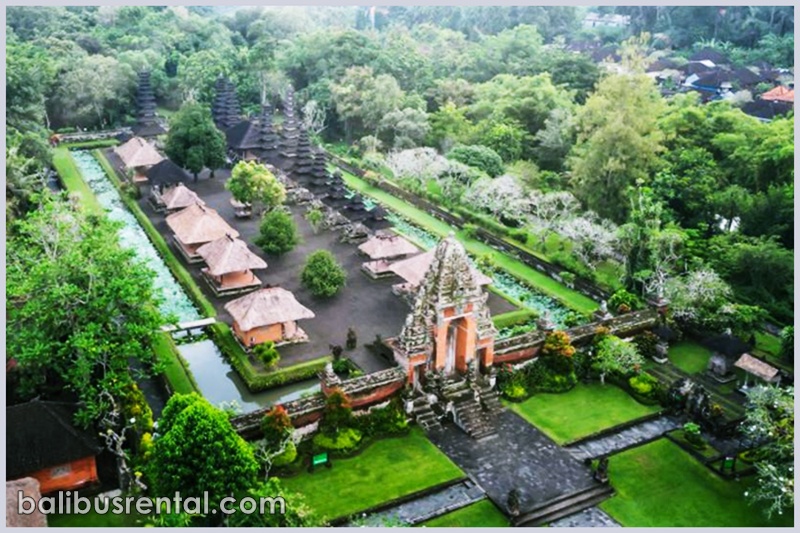
One of the most attractive features of Taman Ayun Temple is its traditional Balinese architectural design. The temple complex covers approximately four hectares and is surrounded by a large water moat, creating the impression that the sacred buildings are floating in the middle of a beautiful garden.
Following the traditional layout of Balinese Hindu temples, Pura Taman Ayun consists of three main courtyards, each representing a different level of sacredness. These courtyards are connected by traditional gateways and pathways.
The three temple sections are:
1. Nista Mandala (Outer Courtyard)
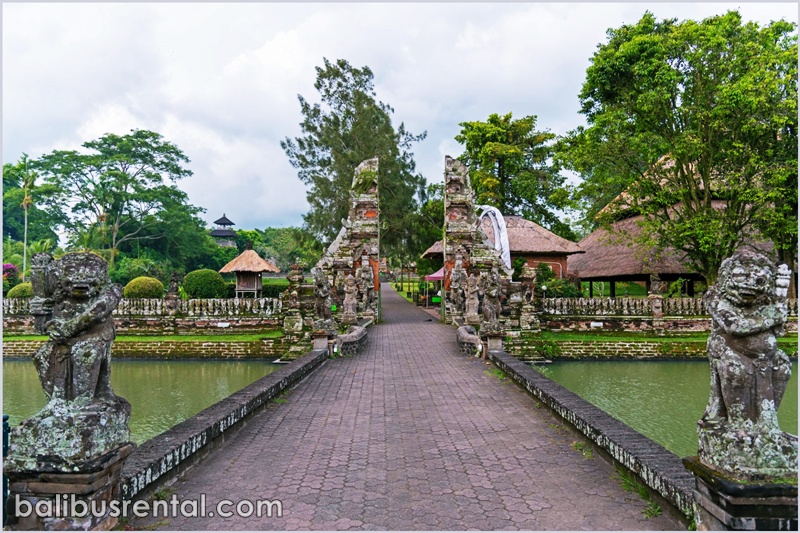
Nista Mandala is the outermost section of the temple and represents the least sacred area. Visitors enter this courtyard through a traditional split gateway called Candi Bentar. This gateway is a distinctive feature of Balinese architecture, with two matching structures divided vertically in the middle.
The outer courtyard provides access to the main temple grounds and offers beautiful views of the gardens, surrounding moat, and traditional temple buildings.
2. Madya Mandala (Middle Courtyard)
Madya Mandala is the middle section of the temple, serving as a transitional area between the outer courtyard and the most sacred inner sanctuary.
This courtyard contains several traditional buildings and shrines used for religious preparations and ceremonies. Visitors can admire the intricate wood carvings, traditional Balinese roof designs, and beautifully arranged temple structures.
One of the important features of this area is the collection of shrines dedicated to the principal temples and sacred places of Bali. These shrines allowed the people of Mengwi to pay their respects to important religious centres throughout the island.
3. Utama Mandala (Inner Courtyard)
Utama Mandala is the innermost and most sacred section of Taman Ayun Temple. It is the main sanctuary where important religious ceremonies and worship activities take place.
The entrance to this sacred courtyard is marked by an impressive raised gateway known as Kori Agung or Paduraksa. This traditional gateway separates the sacred inner area from the middle courtyard.
Inside the sanctuary, visitors can see several impressive Meru shrines, which are multi-tiered pagoda-like structures with roofs made from traditional materials. These shrines are among the most recognisable elements of Balinese Hindu temple architecture.
The number of roof tiers varies according to the religious significance of each shrine. The meru structures create a beautiful skyline and are among the main photographic attractions of Taman Ayun.
The Meru Shrines and Sacred Buildings
The most distinctive architectural feature of Pura Taman Ayun is its collection of traditional Meru shrines. These structures have several roofs arranged in descending sizes, creating an elegant pagoda-like appearance.
In Balinese Hindu belief, meru shrines represent sacred mountains and are associated with the spiritual world and the Hindu gods. Their tiered roofs symbolise the sacred hierarchy of the universe.
Some shrines are dedicated to important Hindu deities, ancestral spirits, and sacred temples throughout Bali. The buildings are constructed using traditional Balinese techniques and decorated with detailed carvings and ornamental elements.
Another important shrine is the Gedong Paibon, associated with the worship of the ancestors of the Mengwi royal family. It reflects the historical relationship between the kingdom, its royal ancestors, and the religious traditions of the local community.
The Beautiful Garden and Water Moat
Apart from its religious importance, Taman Ayun Temple is also famous for its beautiful landscape. The temple is surrounded by a wide water moat that creates a natural boundary between the sacred complex and the outside world.
In the past, the moat was decorated with lotus and water lilies, adding to the peaceful atmosphere of the temple. The surrounding gardens contain various tropical plants, ornamental trees, and flowering vegetation.
Frangipani, cempaka, and kenanga flowers are traditionally associated with Balinese religious offerings and temple ceremonies. Fruit trees such as mangosteen, durian, mango, and rambutan also form part of the traditional garden landscape.
The combination of water, greenery, traditional buildings, and beautifully maintained gardens makes Taman Ayun one of the most photogenic historical temples in Bali.
Visitors can walk along the garden pathways, enjoy views of the temple structures, and appreciate the peaceful surroundings. The moat and gardens also help distinguish Taman Ayun from many other temples in Bali.
Religious Ceremonies at Taman Ayun Temple
Taman Ayun Temple continues to function as an important religious centre for the Hindu community of Mengwi. Various traditional ceremonies are conducted throughout the year according to the Balinese Hindu calendar.
One of the most important celebrations is the temple anniversary ceremony known as Odalan. At Pura Taman Ayun, the Odalan is traditionally held every 210 days, on Tuesday (Anggara), Kliwon, Wuku Medangsia.
During the Odalan celebration, the temple becomes a centre of religious activity. Local residents gather to pray, bring offerings, and participate in traditional ceremonies accompanied by gamelan music and other Balinese cultural performances.
The temple is also associated with ceremonies honouring ancestors, requesting holy water, and maintaining spiritual protection for the community and agricultural activities.
Traditional ceremonies such as Meajar-ajar and Memendak Sang Pitara reflect the importance of ancestral worship in Balinese Hindu culture.
These religious traditions demonstrate that Taman Ayun is not simply a historical tourist attraction but a living temple that continues to play an important role in the spiritual life of the Mengwi community.
Taman Ayun Temple and the UNESCO World Heritage Site
Taman Ayun Temple has international cultural significance because it forms part of the UNESCO World Heritage property known as the Cultural Landscape of Bali Province: the Subak System as a Manifestation of the Tri Hita Karana Philosophy.
The property was officially inscribed on the UNESCO World Heritage List in 2012.
The Tri Hita Karana philosophy represents the Balinese concept of harmony between three important relationships:
-
Parhyangan: Harmony between human beings and God.
-
Pawongan: Harmony between human beings and one another.
-
Palemahan: Harmony between human beings and their natural environment.
The philosophy is closely connected to the traditional Subak irrigation system, which has supported rice cultivation and community cooperation in Bali for centuries.
Taman Ayun is recognised as an important historical example of the relationship between Balinese Hindu temples, royal authority, traditional water management, and the spiritual landscape of the island.
Its inclusion in the UNESCO World Heritage property makes the temple an important destination for visitors who want to understand Bali’s cultural heritage beyond its beaches and natural attractions.
Taman Ayun Temple Entrance Fee and Visiting Information
Taman Ayun Temple is open to visitors throughout the year. Tourists can explore the outer gardens, admire the traditional architecture, and learn about the history of the former Mengwi Kingdom.
Entrance fees and visiting hours may change, so visitors should check the latest information at the ticket counter before travelling.
| Visitor information | Details |
|---|---|
| Temple name | Pura Taman Ayun |
| Location | Mengwi, Badung, Bali |
| Temple type | Balinese Hindu Royal Temple |
| Established | 1634 AD |
| Main attraction | Meru shrines, gardens, moat and architecture |
| UNESCO recognition | Part of a World Heritage property since 2012 |
| Recommended visit | Approximately 45–90 minutes |
Temple etiquette: Visitors should dress respectfully when entering the temple grounds. Avoid disturbing people who are praying or participating in religious ceremonies. Access to certain sacred areas may be restricted to worshippers.


Location and How to Get to Taman Ayun Temple
Taman Ayun Temple is located in Mengwi Village, Badung Regency, approximately 18 kilometres from Denpasar. It is conveniently situated between several popular tourist destinations in southern and central Bali.
The temple can be reached by private car, taxi, motorbike, or a vehicle with a driver. Travelling by private car with a driver is a comfortable option for visitors who want to combine Taman Ayun with other attractions in one day.
Approximate driving distances include:
-
Denpasar to Taman Ayun Temple: 18 km.
-
Ubud to Taman Ayun Temple: approximately 20–25 km.
-
Canggu to Taman Ayun Temple: approximately 15–20 km.
-
Seminyak to Taman Ayun Temple: approximately 20 km.
-
Kuta to Taman Ayun Temple: approximately 23–25 km.
-
Tanah Lot to Taman Ayun Temple: approximately 15–20 km.
Travel times depend on traffic conditions and the starting location.
Nearby Tourist Attractions to Visit
Because of its strategic location in Mengwi, Taman Ayun Temple can easily be included in a Bali sightseeing itinerary. Visitors can combine the temple with several other attractions in central and western Bali.
1. Tanah Lot Temple
A famous sea temple built on a rocky offshore formation, well known for its spectacular sunset views.
2. Jatiluwih Rice Terraces
Beautiful green rice terraces showcasing Bali’s traditional Subak irrigation system and agricultural landscape.
3. Ulun Danu Beratan Temple
A picturesque lakeside temple in Bedugul, surrounded by cool mountain scenery.
4. Alas Kedaton Monkey Forest
A small forest sanctuary featuring long-tailed macaques and a traditional Balinese temple.
Bali Tour with Taman Ayun Temple
Taman Ayun Temple is an excellent destination for a cultural sightseeing tour in Bali. Visitors can explore its historical buildings, traditional meru shrines, beautiful gardens, and learn about the history of the Mengwi Kingdom.
For a more convenient journey, tourists can arrange a Bali private car rental with an experienced driver. A private vehicle allows you to visit Taman Ayun Temple together with Tanah Lot, Jatiluwih Rice Terraces, or other attractions without having to worry about public transportation.
Whether you are interested in Balinese history, traditional architecture, Hindu culture, or beautiful garden landscapes, Taman Ayun Temple is a worthwhile destination to include in your Bali holiday itinerary.
Taman Ayun Temple Entrance Fee
Visitors who wish to explore Taman Ayun Temple (Pura Taman Ayun) in Mengwi, Bali, are required to purchase an entrance ticket. The admission prices vary depending on whether visitors are foreign tourists or Indonesian citizens.
Entrance Ticket Prices
Foreign Visitors
-
Adults: IDR 50,000 per person
-
Children (6 years and above): IDR 25,000 per person
Indonesian Citizens (Domestic Visitors)
-
Adults: IDR 25,000 per person
-
Children (6 years and above): IDR 15,000 per person
Additional Visitor Information
-
Sarong and Sash: Traditional temple attire is included in the entrance ticket and provided at the entrance.
-
Motorbike Parking: IDR 2,000.
-
Car Parking: IDR 5,000.
-
Opening Hours: Daily, from 8:00 AM to 6:00 PM.
-
Payment Method: It is advisable to bring sufficient cash because card payment and QRIS facilities at the ticket counter may occasionally be unreliable.
Travel Tip: For the best experience, visit Taman Ayun Temple in the morning or late afternoon when the weather is generally more comfortable for exploring the temple gardens and traditional Balinese architecture.
Note: Entrance fees, parking charges, and operating hours may change without prior notice. Please confirm the latest rates at the ticket counter before visiting.