Goa Lawah Temple (Bat Cave Temple)
Goa Lawah Temple, also known as Bat Cave Temple, is one of Bali’s most distinctive Hindu temples and an important cultural landmark on the island’s eastern coastline. Located in Dawan District, Klungkung Regency, approximately 50 kilometers from Denpasar, this sacred temple is a popular stop for travelers exploring East Bali.
The temple is famous for its natural cave, which is inhabited by hundreds of bats hanging from the rocky ceiling. Built near the meeting point of the coastal landscape and a rocky hillside, Goa Lawah offers a unique combination of Balinese Hindu spirituality, local mythology, historical traditions, and natural scenery. Across the sea, visitors can enjoy views toward Nusa Penida Island when weather and visibility conditions are favorable.
Unlike many temples surrounded by forests or mountain scenery, Goa Lawah Temple stands close to the sea. Its coastal setting reflects an important aspect of traditional Balinese Hindu beliefs, in which sacred places are associated with both the mountains and the ocean. The temple is therefore not only a popular sightseeing destination but also an important place of worship for local Hindu communities.
The Meaning and Origin of the Name Goa Lawah
The name Goa Lawah comes from the Balinese words goa, meaning cave, and lawah, meaning bat. Together, the words can be translated as “Bat Cave,” describing the natural feature that makes this temple famous.
The cave entrance is located directly behind the temple’s main worship area. Hundreds of bats can often be seen clinging to the cave walls and ceiling, creating a remarkable sight for visitors. Although the bats sometimes fly around the entrance, many remain inside the cave throughout the day.
The presence of these animals has contributed to the temple’s distinctive atmosphere and inspired local stories passed down through generations. For Balinese Hindus, however, the cave is more than a natural shelter for wildlife. It is a sacred place connected with religious symbolism, traditional beliefs, and the spiritual relationship between the natural world and the divine.
Visitors should observe the cave respectfully, avoid disturbing the bats, and follow local temple regulations when entering the sacred complex.
The History of Goa Lawah Temple
The exact date of the establishment of Goa Lawah Temple is not conclusively documented in surviving historical inscriptions. Traditional accounts of its origins are instead preserved in Balinese literary sources, including the Usana Bali and the Babad Pasek, a traditional chronicle associated with the Pasek community.
According to these accounts, the temple is associated with Mpu Kuturan, an influential Hindu religious figure traditionally connected with the development and organization of Balinese religious institutions during the eleventh century. Mpu Kuturan is remembered for his role in shaping religious practices and temple traditions throughout Bali.
Although the precise historical circumstances surrounding the founding of Goa Lawah remain uncertain, the temple’s association with Mpu Kuturan reflects its longstanding importance in Balinese religious history.
Over the centuries, Goa Lawah developed into an important coastal sanctuary. Its position near the sea made it significant within the traditional religious landscape of Klungkung, where temples served not only as places of worship but also as spiritual centers connecting communities with the natural environment.
The temple is also associated with the historical kingdom of Klungkung, one of the important centers of Balinese political and cultural life. Its coastal location and religious significance support the traditional interpretation of Goa Lawah as an important sea-oriented temple within the kingdom’s spiritual landscape.
Today, Goa Lawah remains an active place of worship where Balinese Hindus gather for religious ceremonies, offerings, prayers, and important occasions in the traditional calendar.
The Sacred Bat Cave and Its Natural Features
The most remarkable feature of Goa Lawah Temple is the natural cave behind its main shrine area. The cave extends into a rocky hillside, and its dark interior provides shelter for a large colony of bats.
The constant presence of these animals has become inseparable from the temple’s identity. Their movement, sounds, and silhouettes against the cave entrance create a memorable experience for visitors interested in Bali’s natural and cultural heritage.
Local traditions also associate the cave with other mysterious creatures. Snakes are sometimes mentioned in stories about the rocky area around the entrance, while traditional tales describe unusual appearances of white dogs and chickens near the temple. Such accounts belong to local folklore and should not be confused with verified wildlife observations.
The combination of the cave, its resident bats, the surrounding rock formations, and the temple’s sacred architecture gives Goa Lawah a distinctive character unlike that of many other Hindu temples in Bali.
Rather than treating the cave simply as a tourist attraction, visitors are encouraged to recognize its religious significance and respect the customs observed by local worshippers.
The Legend of the Underground Passage to Besakih Temple
One of the most fascinating legends associated with Goa Lawah Temple claims that the cave extends underground toward Besakih Temple, Bali’s most important Hindu temple complex, located on the slopes of Mount Agung.
According to traditional stories, the cave is believed to connect Goa Lawah with Besakih through an extensive underground passage running beneath the land and toward the mountain. The legend reflects a symbolic relationship between the coastal sanctuary and the sacred mountain landscape of Bali.
A traditional account associated with a manuscript from Mengwi tells of a prince who entered the cave and traveled through its mysterious interior. During his journey, he reportedly encountered numerous snakes. After eventually emerging at Besakih Temple, he was said to have become deaf.
The story has been passed down as part of the temple’s folklore, illustrating the mysterious and supernatural qualities attributed to the cave in traditional Balinese beliefs.
However, there is no verified evidence that the cave physically connects with Besakih Temple, and the underground passage described in the legend has not been established as a geological fact. The story is best understood as a traditional narrative expressing the spiritual connection between two important sacred sites.
Even without a proven underground passage, the legend gives Goa Lawah an important place in Bali’s rich tradition of temple mythology.
Naga Basuki: The Sacred Serpent of Goa Lawah
An important religious association of Goa Lawah Temple is Naga Basuki, the sacred serpent figure connected with Balinese Hindu mythology. The temple complex contains shrines associated with traditional beliefs surrounding this divine serpent.
In Balinese Hindu tradition, Naga Basuki is linked with the forces of nature, the maintenance of cosmic balance, and the relationship between the earth, water, and the spiritual world. Serpents in Hindu mythology frequently symbolize powerful natural forces and the protection of sacred places.
The name Basuki also invites comparison with Besakih Temple. Although the names and traditions are closely associated in Balinese religious narratives, their precise historical and linguistic relationship should not be treated as conclusively established by the surviving evidence.
The presence of Naga Basuki in the religious traditions of Goa Lawah reinforces the temple’s connection with the natural world and the sacred geography of Bali.
The serpent symbolism also complements the temple’s coastal setting. In traditional Balinese cosmology, the sea and mountains form important parts of a larger spiritual landscape in which divine powers are associated with different environments and directions.
The Religious Significance of Goa Lawah Temple
Goa Lawah Temple is commonly recognized as an important sea temple in Bali, associated with the spiritual protection of the coastal region and the relationship between Hindu religious life and the ocean.
Balinese Hindu cosmology places considerable importance on the relationship between mountains, considered sacred and spiritually elevated, and the sea, which represents another powerful dimension of the natural and spiritual world. Temples situated along the coast can therefore hold special significance within this sacred geography.
Goa Lawah’s religious identity also reflects traditional associations with mountain sanctuaries, including Besakih Temple on Mount Agung. These connections demonstrate how individual temples form part of a wider network of sacred places throughout Bali.
The temple continues to host religious observances and ceremonies attended by local Hindu communities. During important ceremonial periods, worshippers come to pray, present offerings, and participate in rituals according to local customs.
For visitors, witnessing these traditions provides an opportunity to understand that Bali’s temples are not merely historical monuments or architectural attractions. They remain living religious institutions that play an active role in community life.
Architecture and Sacred Shrines at Goa Lawah Temple
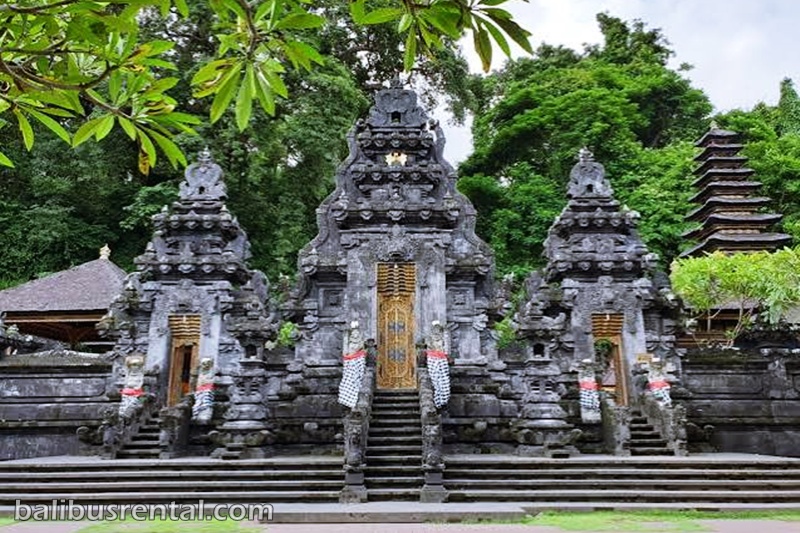
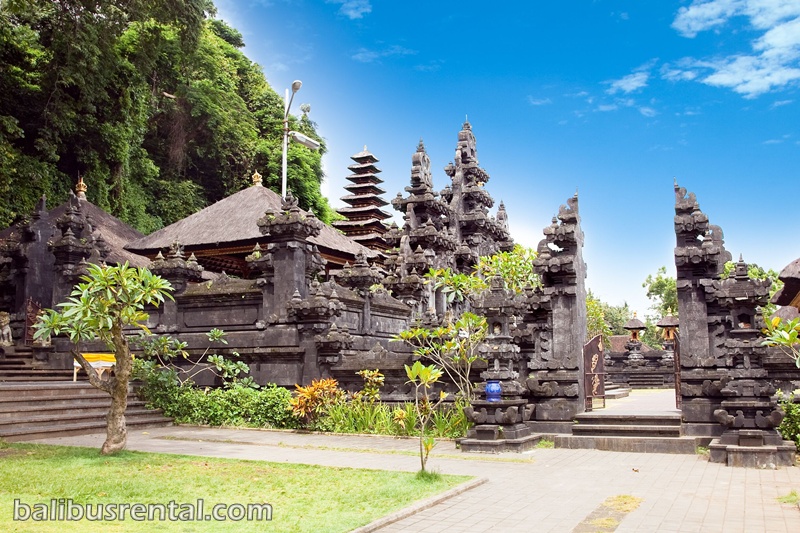
The temple complex features traditional Balinese Hindu architectural elements, including decorated gateways, stone structures, shrines, and courtyards used for religious activities.
Intricate carvings and traditional ornamentation reflect the artistic traditions associated with Balinese temple construction. The arrangement of the sacred spaces also helps distinguish areas used for worship from the surrounding public environment.
The natural cave forms the defining feature of the complex, with the dark opening providing a dramatic backdrop to the temple’s religious structures. This close relationship between natural rock formations and human-made sacred architecture contributes to Goa Lawah’s distinctive appearance.
As with other Balinese Hindu temples, the complex should be approached with respect. Some areas may be reserved for worshippers, and access restrictions can apply during ceremonies or other religious activities.
Goa Lawah Temple as an East Bali Tourist Attraction
Goa Lawah Temple is a popular destination for visitors exploring the eastern part of Bali. Its accessible coastal location makes it a convenient cultural stop when traveling between southern Bali, Klungkung, and other destinations in East Bali.
The temple is particularly interesting for travelers who want to experience Bali beyond its beaches and resort areas. A visit combines cultural discovery, traditional architecture, local legends, and the opportunity to observe the famous bat cave.
Depending on the route, Goa Lawah can be included in a day trip featuring several well-known destinations in the eastern part of the island, such as:
- Klungkung: Explore the historical heritage of the former Klungkung kingdom.
- Kerta Gosa: Visit the historic royal court complex in Semarapura, famous for its traditional architecture and painted ceilings.
- Kusamba: Discover a coastal village traditionally associated with salt production and fishing.
- Candidasa: Enjoy a seaside destination known for its coastal scenery and access to nearby snorkeling and diving locations.
- Tirta Gangga: Visit the former royal water garden in Karangasem, with its pools, fountains, and landscaped grounds.
- Besakih Temple: Explore Bali’s principal Hindu temple complex on the slopes of Mount Agung.
Combining Goa Lawah with these destinations allows visitors to discover the cultural diversity, historical heritage, and scenic landscapes of East Bali in one journey.
Travel Tips for Visiting Goa Lawah Temple
For a comfortable and respectful visit to Goa Lawah Temple, keep the following recommendations in mind:
- Dress appropriately: Wear respectful clothing when entering the temple. A sarong and sash may be required, and local dress regulations should be followed.
- Respect religious ceremonies: Some areas may be restricted during worship or special ceremonies. Follow the instructions of temple staff and local guides.
- Observe the bats from a respectful distance: Avoid touching, feeding, or disturbing the animals, and do not attempt to enter restricted sections of the cave.
- Bring a camera: The temple’s traditional architecture, cave entrance, and coastal surroundings offer interesting photographic opportunities. Always ask permission before photographing worshippers during religious activities.
- Check current entrance fees: Ticket prices and visitor arrangements may change, so confirm the latest information before your visit.
- Consider a guided tour: A knowledgeable local guide can explain the temple’s religious significance, historical traditions, and legends in greater detail.
Visitors should also be aware that the temple is an active place of worship. Maintaining a quiet and respectful manner helps preserve the atmosphere for both worshippers and tourists.
Conclusion: Discover the History and Legends of Goa Lawah Temple
Goa Lawah Temple, or Bat Cave Temple, is one of Bali’s most distinctive cultural attractions, combining a natural cave inhabited by bats with centuries of religious tradition and local mythology. Situated on the coast of Klungkung Regency, the temple offers a fascinating insight into the relationship between Balinese Hindu spirituality, the ocean, and the sacred mountain landscape.
Its traditional association with Mpu Kuturan, the legend of an underground passage to Besakih Temple, and the religious symbolism of Naga Basuki all contribute to its historical and cultural significance.
Whether you are interested in Balinese Hindu temples, ancient legends, traditional architecture, or sightseeing in East Bali, Goa Lawah Temple is a worthwhile destination to include in your Bali travel itinerary. A visit offers more than a chance to see the famous bat cave; it provides an opportunity to appreciate the living traditions and spiritual heritage that continue to shape Balinese culture.


Religious Shrines and Traditional Balinese Ceremonies
The coastal area around Kusamba, in Klungkung Regency, East Bali, is closely connected with traditional Balinese Hindu beliefs and local community life. The area features approximately 25 shrines and pavilions, reflecting a mixture of ancestral veneration and Hindu religious worship. These sacred structures demonstrate the important role that spiritual traditions continue to play in the lives of coastal communities.
Religious ceremonies are held according to the traditional Balinese calendar, which follows a system influenced by the Hindu-Javanese calendar tradition. Many temple anniversaries, known as odalan, take place every six months according to the 210-day Balinese calendar. The exact dates vary depending on the temple and its prescribed ceremonial schedule. Balinese calendars published for the following year often provide information about important religious observances and festival dates.
These ceremonies bring together local families and community members to pray, present offerings, and maintain their ancestral customs. For visitors exploring Kusamba Beach, these traditions provide an insight into the close relationship between Balinese Hindu spirituality, the sea, and the livelihoods of local residents.
Traditional Fishing Boats and Sea Transportation to Nusa Penida
Kusamba is an important traditional fishing and coastal trading area, with strong connections to Nusa Penida Island, which lies across the Badung Strait. For generations, local fishermen and boat operators have played a role in transporting goods and passengers between Bali and the neighboring island.
Traditional boats are used to carry various supplies, including rice, legumes, fruit, and other daily necessities. Some vessels are also involved in transporting agricultural materials and other commercial goods. Larger boats with several crew members can carry substantial cargo, depending on the vessel’s design, loading capacity, and sea conditions.
Boat journeys between the Kusamba area and Nusa Penida vary in duration according to the departure point, vessel type, weather, currents, and destination. Some crossings may take approximately 30 minutes, while other journeys can take considerably longer. Travelers should confirm departure arrangements and estimated travel times with local operators before making plans.
In addition to supporting local trade, boats provide access to Nusa Penida for residents and visitors. The island is known for its dramatic coastal cliffs, coral reefs, and beaches with clear water and white sand. However, passenger services and departure locations can differ, so travelers should check which routes operate from Kusamba and which destinations they serve.
Segara Beach: A Sacred Location for Balinese Hindu Rituals
Segara Beach in Kusamba holds cultural and religious importance for the local Hindu community. In Balinese Hindu tradition, the sea is associated with purification and the return of certain elements of life to nature. As a result, coastal locations are sometimes used for religious ceremonies connected with death and cremation rites.
One important ritual associated with the sea is nganyut, a ceremony in which ashes or other prescribed cremation remains are released into the water following an Ngaben, or Balinese Hindu cremation ceremony. The ritual symbolizes the return of physical elements to nature and forms part of the broader spiritual process surrounding death and remembrance.
The timing and procedures of these ceremonies depend on family traditions, religious guidance, and local customs. Because Segara Beach is a place of worship as well as a coastal destination, visitors should remain respectful when ceremonies are taking place. Photography should be avoided when it may disturb grieving families or interfere with religious activities.
Kusamba Fish Market and the Local Fishing Industry
Fishing is one of the traditional economic activities that has shaped the character of Kusamba. The waters between Bali and Nusa Penida support a variety of marine life, and local fishermen continue to depend on the sea for their livelihoods.
A fish market in the Kusamba area provides an opportunity to observe the local fishing trade. According to traditional descriptions of the area, market activity often takes place between approximately 10:00 a.m. and 4:00 p.m., although actual operating hours can vary with fishing schedules, weather, catches, and local trading arrangements.
At the market, visitors may see fishermen bringing in their catches and local traders handling fresh seafood for sale. The atmosphere offers a glimpse into everyday life in a traditional Balinese fishing community, away from the island’s larger resort and shopping districts.
The surrounding coastline is frequently dotted with fishing boats, including vessels with white sails. These boats create a distinctive maritime landscape and illustrate the continuing importance of fishing in the local economy.
Traditional Salt Production in Banjar Batur
Besides fishing, Kusamba is also known for its traditional salt-making heritage. In the Banjar Batur area, some local families have historically produced sea salt using techniques passed down through generations.
Traditional salt production generally involves collecting seawater and concentrating it through evaporation before allowing salt crystals to form. Depending on the method used, producers may employ coastal sand, filtered seawater, wooden equipment, and natural sunlight as part of the process.
This small-scale industry represents an important part of the area’s cultural heritage. Traditional salt makers rely on local environmental conditions, particularly seawater availability, sunlight, and suitable coastal surfaces. Their work reflects the resourcefulness of communities that have developed livelihoods around the sea.
Although modern production methods and changing market conditions have affected traditional salt-making practices, the activity remains an important aspect of Kusamba’s identity. Visitors interested in Balinese culture may find it worthwhile to learn about this heritage when exploring the village.
Discover the Coastal Heritage of Kusamba, Bali
Kusamba offers more than a scenic shoreline. Its traditional fishing boats, coastal trade, sacred ritual sites, fish market, and salt-making heritage reveal how closely the lives of local residents are connected with the sea.
Whether you are interested in Balinese Hindu traditions, traditional village life, local seafood, or the cultural connections between Bali and Nusa Penida, Kusamba provides a meaningful opportunity to discover another side of the island. A visit can also be combined with other East Bali attractions, including Goa Lawah Temple, the historic Klungkung royal complex, and the coastal resorts of Candidasa.
For travelers seeking authentic cultural experiences beyond Bali’s best-known tourist areas, Kusamba is a worthwhile stop for understanding the island’s maritime traditions and living heritage.
Goa Lawah Temple Entrance Fee and Parking Charges
The entrance ticket prices for Goa Lawah Temple (Pura Goa Lawah) in Klungkung, East Bali, vary depending on nationality and age. Visitors may also need to pay an additional fee for renting traditional Balinese temple clothing if it is not included in the admission ticket.
Goa Lawah Temple Ticket Prices
The following prices are indicative and may change depending on current temple regulations.
- International Adults: IDR 25,000–30,000 per person.
- International Children: Approximately IDR 15,000 per person.
- Domestic Adults (Indonesian Citizens): Approximately IDR 15,000 per person.
- Domestic Children (Indonesian Citizens): Approximately IDR 10,000 per person.
- Sarong Rental: Approximately IDR 4,000–5,000 per person, if not included in the entrance ticket.
- Worshippers: Local residents visiting specifically to pray may be eligible for free entry, subject to the temple’s regulations.
Goa Lawah Temple Parking Fees
Visitors arriving by private vehicle can use the designated parking area near the temple. The reported parking charges are:
- Motorcycle or Scooter: IDR 2,000.
- Car: IDR 5,000.
Parking fees and arrangements may change, so it is advisable to confirm the current rates upon arrival.
Important Information for Visitors
Payment method: Bring sufficient cash in Indonesian rupiah, as cash may be required at the ticket counter and for parking or clothing rental.
Temple dress code: Visitors should dress modestly, covering their shoulders and knees. A traditional Balinese sarong and sash may be required when entering the temple grounds. Check whether these items are included in your admission ticket or available for rent at the entrance.
Respect religious customs: Goa Lawah Temple is an active Hindu place of worship. Visitors should respect ongoing ceremonies, follow local instructions, and avoid disturbing worshippers or the bats inhabiting the sacred cave.
Before visiting Goa Lawah Temple, check the latest entrance fees and visitor requirements, as prices and policies may change.